

How to Transition to Retirement & Love Every Minute of It
Some links in this post are affiliate links. As an Amazon Associate, we earn from qualifying purchases that help keep our content free.
Retirement isn’t just the end of a career. It’s the start of an entirely new life chapter. Yet, few talk about how emotional the transition to retirement can be. One day you’re checking emails and planning meetings, and the next you’re wondering what day it is and what to do with all that freedom. This guide helps you shift from routine to relaxation with ease, joy, and confidence. You’ll discover how to plan for retirement, recognize when it’s truly time, and fill your days with retirement activities that spark happiness and meaning.
6 Steps To Transition To Retirement

The transition to retirement isn’t just about stopping work. It’s about starting a whole new way of living. After decades of structure, it can feel strange to suddenly have time for yourself again. The secret to a smooth and joyful transition lies in preparation, patience, and purpose. Here’s a step-by-step guide to help you navigate it with confidence and excitement.
Step 1: Redefine What Retirement Means to You
Forget the old image of retirement as endless rest. Today, it’s about freedom, fulfillment, and flexibility. Take a moment to reflect on what a meaningful retirement lifestyle looks like for you. Do you imagine slow mornings and travel adventures, or creative projects and volunteering? Write your ideas in a retirement journal; seeing them on paper helps bring them to life.
Step 2: Prepare Emotionally and Mentally
One of the biggest retirement mistakes is focusing only on money. The emotional shift can be just as big. You may feel excitement, but also uncertainty about your identity after leaving work. Be gentle with yourself during this period of preparing for retirement. Stay connected with friends, join clubs, or take up new hobbies to maintain a sense of belonging and purpose.
Step 3: Plan Your Finances With Joy (Not Fear)
Financial peace creates emotional peace. Review your budget and understand your income streams before retiring. Explore retirement planning insights to ensure your savings align with your dreams. It’s also wise to keep learning about retirement planning finance so you can adjust as needed. Using a budget notebook or financial planner can make the process feel more empowering and less stressful.
Step 4: Create a New Daily Rhythm
Without the structure of a job, your days can feel open-ended. That’s both a gift and a challenge. Start small; build routines that bring joy and balance. Morning walks, reading, gardening, or a cup of tea in the sunshine can give your days shape and intention. Think of it as your new version of “office hours,” except now it’s dedicated to joy and well-being.
Step 5: Stay Curious and Keep Evolving
The transition to retirement isn’t a one-time event. It’s an ongoing journey. What fulfills you in the first year might change later. Stay curious. Take a painting class, plan a small trip, or start a community garden. Trying new things keeps your mind sharp and your heart open. Remember, this is your opportunity to create a lifestyle that truly reflects who you are.
Step 6: Celebrate How Far You’ve Come
Take time to honor everything you’ve accomplished so far. You’ve worked hard, grown wiser, and earned this chapter. Celebrate it! Treat yourself to something that symbolizes this milestone. Maybe a beautiful memory keepsake box, a relaxing weekend getaway, or a cozy new reading chair for your next adventure in joy.
A smooth transition isn’t about rushing into the next thing. It’s about creating space for life to unfold naturally. With preparation, mindfulness, and a bit of curiosity, your retirement years can become your most joyful and meaningful yet.
Phases of Retirement
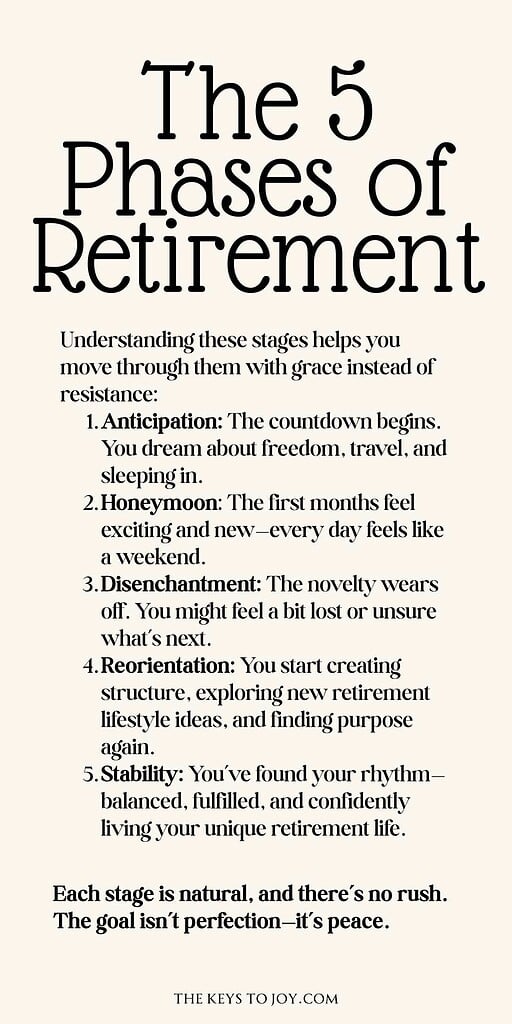
Every major life transition has stages, and retirement is no different. Understanding the phases of retirement helps you navigate each step with more grace and joy. Think of it as a journey, not a destination. One that evolves as you do.
Below are the five most common phases retirees experience, along with tips to move through each one smoothly and meaningfully.
Phase 1: The Honeymoon Stage > Freedom at Last!
The first months (or even years) can feel magical. No alarms, no deadlines, just endless possibilities. Many people fill this phase with travel, hobbies, or long-awaited projects.
Enjoy it fully, but avoid the retirement mistake of overcommitting or spending too quickly. Create a joyful retirement lifestyle where your energy and finances stay balanced.
Try new retirement activities like morning yoga, nature walks, or creative journaling to ease into a slower rhythm while staying inspired.
Phase 2: The Reality Stage — Finding Your Balance
After the initial excitement fades, some retirees feel restless or unsure. Without structure, days can start blending together. This is completely normal. It’s your cue to rediscover what gives your life purpose.
Start exploring small routines that make you feel grounded. Join a local club, take an online course, or volunteer for a cause you love. Creating community and structure are key ingredients to long-term happiness.
Tools like a daily planner or goal-setting workbook can help you find balance and direction during this stage.
Phase 3: The Reorientation Stage — Redefining Yourself
In this phase, you begin asking bigger questions: Who am I now? What truly matters to me?
It’s a time to let go of old labels; job titles, roles, and embrace your authentic self. This can feel both exciting and uncomfortable, but it’s where growth happens.
Experiment with new passions, hobbies, or creative outlets. Try painting kits, gardening tools, or even travel journals to capture your evolving story. This phase is about building a new identity that reflects joy, purpose, and personal freedom.
Phase 4: The Stability Stage — Living with Intention
After experimenting and adjusting, most retirees find a comfortable rhythm. You know what makes you happy and what doesn’t. Your routines feel natural, your days meaningful.
This is the sweet spot of retirement, where joy feels effortless. Continue nurturing your mind, body, and spirit. Maintain social connections and keep challenging yourself with fun retirement activities like dancing, hiking, or photography.
This is also a good time to revisit your retirement planning insights to ensure your finances align with your lifestyle goals.
Phase 5: The Fulfillment Stage — Embracing Peace and Purpose
The final phase is all about peace, gratitude, and legacy. You’ve created a life that feels aligned with your values and rhythms. Many retirees in this phase focus on family, creativity, or mentoring others.
Celebrate the wisdom you’ve gained and the life you’ve built. Fill your days with slow joys. Morning coffee rituals, nature walks, or quiet evenings journaling your reflections. A gratitude journal is a beautiful way to capture the richness of this chapter.
Each phase of retirement offers a new opportunity to learn, grow, and rediscover what makes life joyful. Wherever you are in your journey, remember: you’re not slowing down. You’re finally living life on your terms.
How To Plan For Retirement

Good planning turns retirement from something you hope will be wonderful into something you know will be. Whether you’re months or years away, learning how to plan for retirement gives you confidence, clarity, and peace of mind. The best part? You can design a life that feels joyful, abundant, and deeply aligned with what matters most to you.
Here’s a simple roadmap to get started.
Step 1: Envision Your Dream Lifestyle
Start by asking yourself what your ideal retirement lifestyle looks like. Do you see yourself traveling, gardening, or spending slow mornings with family? Write down everything. From where you want to live to how you want to spend a typical Tuesday.
This is where your dreams start to take shape. Use a goal planner or vision journal to help you visualize your next chapter clearly and stay inspired along the way.
Step 2: Assess Your Finances with Clarity
Once your dream is clear, it’s time to look at your numbers with calm and clarity. Start by reviewing your 401(k), savings, and investments. Check your contribution history and any employer match you’ve received it all adds up. Look into how and when you can withdraw funds without penalties and what taxes you might owe.
Next, explore your Social Security benefits. You can easily estimate your monthly payout through your MySocialSecurity online account. Remember that waiting until your full retirement age or even 70 can increase your benefit amount significantly. This can be an excellent long-term strategy if you plan to live a healthy, active life.
Then, consider health insurance, which often becomes one of the biggest expenses in retirement. If you’re retiring before age 65, you’ll need to bridge the gap until Medicare begins. Compare options like COBRA, marketplace plans, or private coverage to ensure your healthcare needs are covered. Once you reach 65, review Medicare Parts A, B, and D, plus any supplemental (Medigap) or Advantage plans that fit your lifestyle and budget.
All of this forms the foundation of smart retirement planning finance. Keeping your money organized. Using a budget planner or financial workbook helps you see the full picture clearly. The goal isn’t just security; it’s peace of mind that supports a joyful, worry-free retirement lifestyle.
Step 3: Balance Practicality with Joy
Money is important, but joy is priceless. Make room in your retirement plan for things that light you up. It might be a family trip, art classes, or simply a cozy reading nook that feels like heaven. Build these into your financial plan so your retirement feels abundant and guilt-free.
Step 4: Plan Your Time, Not Just Your Finances
Many retirees underestimate how much free time they’ll suddenly have. Think about retirement activities that will make your days fulfilling. From walking groups and volunteering to learning new skills, these are the things that bring rhythm and meaning to your week.
Create a retirement schedule planner or weekly routine that mixes relaxation with purpose. It’s one of the best ways to avoid the “What now?” feeling.
Step 5: Seek Wisdom & Stay Flexible
Planning for retirement isn’t a one-time task. It’s an evolving journey. Stay open to retirement planning insights from others who’ve walked this path. Join forums, read books, and talk to financial advisors who value both wealth and well-being.
Most importantly, keep adjusting as your life evolves. Flexibility ensures your retirement stays aligned with your joy, not your old plans.
A solid plan isn’t about restrictions. It’s about freedom. The more intentional you are now, the easier it becomes to step into retirement feeling ready, radiant, and excited about what’s ahead.
When To Retire Tips (Financially & Mentally)
How to Know You’re Truly Ready to Retire In Your Wallet and Your Heart

Deciding when to retire is one of the most personal and powerful choices you’ll ever make. It’s not only about whether your bank account says “yes” it’s also about whether your heart does too. Here’s how to know when you’re truly ready, both financially and emotionally.
1. Check Your Financial Readiness
Start by reviewing your income sources. Look at your 401(k), savings, investments, and any pensions you may have. Many retirees aim to replace about 70–80% of their working income to maintain their lifestyle comfortably.
Check your Social Security benefits through your MySocialSecurity account. Claiming benefits early (at 62) lowers monthly payments, while waiting until full retirement age or 70 increases them, sometimes by up to 30%. If your savings and benefits can support your living costs, you’re financially closer than you think.
Don’t forget health insurance. If you retire before 65, you’ll need coverage until Medicare starts. Look into COBRA, Affordable Care Act marketplace plans, or private health options to bridge the gap. Once eligible, review Medicare Parts A and B, plus supplemental plans, to ensure your health needs are fully protected.
This is where retirement planning finance meets peace of mind, having a clear picture of your income, benefits, and healthcare helps you retire without fear.
2. Listen to Your Emotional Readiness
Even with financial security, your mindset matters. Ask yourself: Am I ready to let go of my work identity? Some thrive in structure and social connection, while others feel liberated by open days and freedom. Try easing into new retirement activities; volunteering, creative hobbies, or part-time projects to test what fulfills you outside of work.
3. Ease Into It Gradually
Retirement doesn’t have to be an on/off switch. Many people find balance in semi-retirement consulting, freelancing, or reducing hours while adjusting emotionally and financially. This gentle transition lets you experience your future retirement lifestyle while still maintaining purpose and income.
4. Reassess Regularly — Both Mind and Money
Life changes, and so will your needs. Review your budget, investments, and health coverage yearly. Keep checking in with your feelings too. If your finances are stable and your days already feel fulfilling, it may be time to make it official.
5. Trust Your Timing
There’s no universal “right” age to retire, only the one that fits your soul and situation. When your finances feel steady, your health coverage is clear, and your heart feels excited for what’s next, that’s your sign you’re ready.
Use a retirement journal to track your thoughts, fears, and ideas during this transition. You’ll see your readiness unfold on paper both emotionally and financially.
Retirement isn’t about walking away from something it’s about walking toward a life that finally fits who you are today. When your wallet and your heart agree, you’ll know you’re ready to begin your next, most joyful chapter.
Smart Retirement Budgeting Tips
Simple Ways to Manage Money and Enjoy More Freedom

You’ve worked hard to reach this chapter of life, now it’s time to make your money work for you. Creating a smart retirement budget isn’t about restriction. It’s about designing a lifestyle that feels both secure and joy-filled. With a few simple shifts, you can protect your savings while still saying “yes” to the things that make life beautiful.
1. Track Your Spending Before You Retire
Before you make the leap, track your current expenses for a few months. This gives you a clear picture of what you actually spend on groceries, entertainment, and travel. Then adjust for post-retirement changes, like no commuting costs, but possibly higher healthcare or leisure spending.
Using a budget planner or expense tracker notebook can make this process easy and even fun.
2. Create a “Must-Have” and “Nice-to-Have” List
Divide your expenses into two categories. Essentials: housing, food, healthcare, insurance. Non-essentials: hobbies, dining out, gifts, or travel. Seeing these side by side helps you understand where you can save without losing joy.
This also helps you avoid common retirement mistakes like overspending early and running short later.
3. Plan for Health Costs and Inflation
Healthcare costs tend to rise with age. Make sure your retirement planning finance accounts for insurance premiums, prescriptions, and unexpected care. If you use Medicare, consider adding a Medigap or Advantage plan for extra coverage.
Inflation can also eat into your savings over time; build a small cushion for annual increases in living costs.
4. Keep Fun Money in Your Budget
Joy is essential! Set aside a “fun fund” for spontaneous trips, dinners out, or new hobbies. This keeps your budget flexible and your spirit light. You didn’t retire to count pennies, you retired to create freedom.
Use a separate account or envelope system so you can enjoy spending without guilt.
5. Simplify and Automate
Reduce money stress by automating bills, transfers, and savings. Set up automatic payments for recurring expenses and schedule regular transfers into a travel or emergency fund.
This simple step keeps you organized and frees up mental space for what really matters, living fully.
6. Revisit Your Budget Regularly
Your retirement lifestyle will evolve, and so should your budget. Reassess every six months, especially after major life events or spending changes. This is one of the best retirement planning insights you can adopt. It keeps your plan flexible and aligned with your goals.
7. Seek Trusted Retirement Advice
If numbers aren’t your favorite thing, you’re not alone. A financial advisor can help you set up withdrawals from your 401(k), optimize Social Security benefits, and ensure your savings last.
Choose someone who respects your lifestyle goals, not just your portfolio. Their guidance can make your plan simpler and your future brighter.
Budgeting in retirement isn’t about cutting back, it’s about creating balance. When you’re clear about your priorities and confident in your plan, money becomes a tool for freedom, not fear.
Where to Live After Retirement
How to Choose the Perfect Place for Your Next Chapter

One of the biggest and most exciting decisions in your retirement lifestyle is where to live. After years of work routines, the world suddenly opens up, you can finally choose a place that fits you instead of your job. Whether you dream of palm trees, mountain trails, or simply a cozy community near family, your ideal home base sets the tone for your next chapter.
1. Start with Your Lifestyle Vision
Before you search listings, picture your ideal day. Do you see yourself walking on the beach, tending a garden, or sipping coffee near the grandkids? This vision gives you clues about what kind of environment will make you happiest urban buzz, small-town charm, or peaceful countryside.
Jot your thoughts down in a retirement journal to help you get clear before making big moves.
2. Factor in Cost of Living
A dream location can quickly lose its shine if the bills pile up. Research property taxes, insurance, and everyday costs like groceries and transportation. Some states like Florida, Tennessee, and Texas, don’t charge state income tax, making them popular retirement choices.
If you’re preparing for retirement and still saving, knowing your future expenses now helps you set realistic goals and avoid surprises later.
3. Prioritize Healthcare Access
Good healthcare matters more than ocean views. Check the proximity and quality of hospitals, specialists, and pharmacies in your chosen area. If you have specific medical needs, ensure there are reliable options nearby or within your health plan’s coverage network.
4. Stay Connected to What You Love
Whether it’s family, friends, or familiar routines, connection is key. Some retirees choose to move closer to loved ones, while others find vibrant 55+ communities filled with new opportunities for friendship.
Think about how easy it is to travel. Being near an airport or major highway can make visits effortless.
5. Test the Waters Before You Move
Don’t rush. Spend a few weeks or months in your top locations before deciding. Renting short-term lets you experience daily life, weather, and community vibes firsthand. You’ll quickly discover if it feels right.
If you’re adventurous, consider early retirement travel. Spend each winter in a different state or country before settling down permanently.
6. Consider Downsizing for Simplicity
Less maintenance means more freedom. Many retirees find that moving into a smaller home, apartment, or even an RV creates space for new experiences instead of clutter.
Selling or renting your current home can also free up funds for travel or hobbies, just make sure you include it in your retirement planning finance review.
7. Follow Your Heart (and Your Budget)
Choosing where to live in retirement isn’t just a financial choice. It’s an emotional one. It’s about where you’ll feel most alive, supported, and inspired. Use a blend of retirement planning insights and intuition to guide your decision.
A simple test: When you picture yourself there, do you feel peace? Excitement? A sense of home? That’s how you’ll know.
You’ve earned the right to live exactly how, and where, you want. Whether it’s staying near loved ones or chasing sunshine across the map, your new home should reflect your freedom and joy.
Finding Purpose & Joy After Retirement
How to Create a Meaningful Life Beyond the 9–5

Retirement gives you something most people spend their whole lives wishing for time. But when the structure of work disappears, that freedom can feel both exciting and a little overwhelming. The key is learning how to fill your days with purpose, connection, and creativity so your retirement lifestyle feels meaningful and alive.
1. Redefine What Purpose Means to You
You don’t need a job title to have purpose. Purpose is simply doing what lights up your heart and adds value to your world. It might be mentoring younger people, volunteering for a cause you love, or exploring your creative side.
Start by writing down what makes you feel useful and joyful in a retirement journal. The answers may surprise you, they often point toward passions you’ve put aside for years.
2. Keep Learning and Growing
Curiosity keeps the spirit young. Learning a new skill or hobby brings a sense of achievement and excitement to your days. Take a class, learn a language, or finally master that recipe you’ve bookmarked for years.
Try using a hobby planner or goal tracker to stay inspired, it’s amazing how much joy comes from small wins and new discoveries.
3. Connect with Others
Purpose often blooms through connection. Join local clubs, faith groups, or volunteer programs that align with your interests. Social connection reduces loneliness and boosts happiness. It’s one of the best retirement activities you can invest in.
If in-person options are limited, explore online communities or virtual workshops. Staying connected keeps your mind sharp and your heart full.
4. Give Back in Small Ways
Acts of kindness don’t have to be grand to be meaningful. Offer to help neighbors, babysit grandkids, or share your talents in your community. Even small contributions add up to big purpose.
This aligns beautifully with the idea of retirement advice that focuses not just on money, but on meaning fulfillment often comes from giving, not getting.
5. Create Joyful Rituals
Joy thrives in simple, intentional moments. Start your morning with gratitude, end your day with reflection, and fill the in-between with things that bring delight like gardening, reading, or painting.
A gratitude journal can help you stay present and aware of all the little blessings that fill your new rhythm.
6. Embrace the Freedom to Be Yourself
Retirement is a chance to return to your authentic self the one who existed before deadlines and job titles. Dress how you want, move at your own pace, and spend time only on what truly matters.
Your new definition of success might be peace, creativity, or laughter and that’s beautiful.
When you fill your days with purpose and presence, retirement stops being an ending and becomes a celebration of life itself. Joy is found not in doing more, but in doing what matters most.
How To Stay Active In Retirement

Staying active in retirement isn’t just about moving your body it’s about keeping your mind, heart, and spirit engaged. After years of work routines, you finally get to choose what energizes you every single day. Whether you crave adventure or quiet creativity, finding ways to stay active keeps your retirement lifestyle vibrant and fulfilling.
Here’s how to stay active and love every minute of it.
1. Move Your Body in Ways You Enjoy
Forget rigid gym schedules this is your time to move with joy. Walk through your neighborhood, try morning stretches, or join a local dance class. Gentle movement strengthens your body and boosts your mood.
Add a little inspiration with a step tracker, a comfy pair of walking shoes, or a yoga mat that invites you to roll it out every morning. Staying physically active supports your energy and helps prevent many age-related aches and dips in vitality.
2. Keep Your Mind Curious
Learning something new is one of the best retirement activities for long-term happiness. Take an online course, learn to play guitar, or finally dive into that stack of mystery novels you’ve saved for “someday.”
Try a crossword puzzle book or start journaling your thoughts in a gratitude journal both help keep your mind sharp and your heart grateful.
3. Nurture Social Connections
Isolation can sneak up on retirees, so it’s essential to stay connected. Join hobby groups, volunteer, or host weekly coffee mornings with friends. If you live far from loved ones, schedule regular video calls or plan shared projects online.
Community keeps the spirit young. You could even create a retirement bucket list with a friend and start checking off joyful experiences together.
4. Fuel Your Passions
Now’s the time to do what truly lights you up. Gardening, painting, photography, or baking, whatever makes your heart sing deserves your attention.
Set up a small creative corner with painting supplies, gardening gloves, or a recipe journal for your favorite creations. Creativity keeps the soul active and helps you express your unique joy.
5. Practice Emotional Wellness
Staying active also means nurturing your emotional health. Meditation, gratitude, and mindfulness bring peace and presence into your daily rhythm.
Try starting or ending your day by writing three things you’re grateful for in a gratitude notebook. This simple ritual keeps your mind positive and your heart open to joy.
Staying active in retirement is about flow, not force. Fill your days with things that make you feel alive, connected, and at peace. Whether it’s a sunrise walk or learning watercolor painting, every choice you make adds meaning to your journey.
Overcoming Common Retirement Challenges
Gentle Guidance for When Retirement Doesn’t Go as Planned

Even the most joyful retirements come with moments of doubt, adjustment, or loneliness. After all, you’re stepping into a brand-new way of living, one without the structure, validation, or pace you’ve known for years. But these challenges don’t mean you’re doing it wrong. They’re simply part of learning to live life on your own terms.
Here’s how to move through the most common bumps on the road with grace and confidence.
1. Feeling Lost Without Routine
Many retirees are surprised by how disorienting open days can feel at first. Going from full schedules to total freedom is a big shift.
The solution? Create light structure. Start with a simple daily rhythm; morning walks, breakfast rituals, and scheduled retirement activities that give your days shape.
Use a daily planner or habit tracker to build routines that feel grounding but flexible. Over time, this new flow will start to feel natural.
2. Adjusting to a New Identity
Your career may have defined you for decades, and it’s normal to wonder who am I now? without it. This is your invitation to rediscover yourself. Try new roles; mentor, artist, traveler, caregiver, storyteller.
Journaling or reflecting with trusted friends can help you rewrite your story in a way that celebrates where you’ve been and where you’re going. Remember: your worth was never tied to your work. It’s who you are that matters.
3. Managing Loneliness
One of the most common retirement challenges is feeling isolated after leaving daily social circles. Proactively nurture community; join clubs, volunteer, or take classes that connect you with like-minded people.
Even small interactions, like chatting with neighbors or attending local events, can lift your spirits. Staying socially active keeps your heart healthy and your days full of meaning.
4. Worrying About Finances
Money worries can sneak up even on well-prepared retirees. Revisit your budget regularly and check that your withdrawals from savings or your 401(k) align with your needs.
Explore retirement planning insights to adjust for inflation or new expenses like travel or healthcare. Sometimes, a quick meeting with a financial advisor can bring huge peace of mind.
5. Coping with Health Concerns
Aging gracefully doesn’t mean avoiding change, it means learning to adapt. Keep up with preventive care, stay active, and eat well. If you face a new diagnosis, don’t hesitate to ask for support mentally and physically.
You can find strength in small, consistent choices: daily walks, mindfulness practice, or even gratitude journaling. A wellness tracker can help you stay motivated and celebrate progress.
6. Keeping Motivation Alive
Once the initial excitement fades, it’s easy to fall into autopilot. Keep setting small goals; plant a new garden, learn digital photography, or visit a nearby town once a month.
Fresh experiences create momentum and give you something to look forward to. You’re not done growing, you’re just growing differently now.
Retirement, like every great life transition, comes with lessons. With patience, planning, and self-compassion, every challenge can become an opening for joy, strength, and new beginnings. Remember, you’re not just retired. You’re reinvented.
A Joyful New Chapter Awaits
Retirement isn’t the end of something. it’s the beginning of everything you once wished you had more time for. It’s a time to rediscover who you are without deadlines, to create new routines filled with meaning, and to fill each day with small joys that make life feel rich and full.
Whether you’re preparing for retirement, already enjoying your freedom, or still deciding when the right moment is, remember: the best years are the ones you live with intention, curiosity, and heart.
You’ve earned this season. Make it beautiful. Make it yours.
If you loved this guide, keep your inspiration flowing with more joyful reads from thekeystojoy.com:
