Daily Motivation for Retirees Who Want To Live Their Best Life!
Some links in this post are affiliate links. As an Amazon Associate, we earn from qualifying purchases that help keep our content free.
Retirement is a beautiful new chapter, but even with all the freedom in the world, finding daily motivation can feel surprisingly tricky. You want to wake up excited, feel inspired, and create a Retirement Lifestyle that fills your days with purpose, joy, and energy, not boredom or uncertainty. This guide offers simple, meaningful ways to stay positive, mentally engaged, and physically active, so you can genuinely live your best life every single day. Consider this your friendly coach in your pocket, here to help you discover how to stay positive in retirement, build momentum, and add a little extra magic to your daily routine. Ready to feel inspired again? Let’s begin!
Daily Motivation For Retirees

Motivation in retirement comes from creating a life that feels intentional, emotionally nourishing, and aligned with who you are now — not who you used to be when your days were ruled by work. The beauty of retirement is that you finally have time to build a life that energizes you. These deeper, research-backed motivation strategies help you wake up with more joy, purpose, and momentum each day.
1. Begin With a Grounding Ritual That Signals “A Fresh Start”
A short grounding ritual helps your mind shift out of autopilot and into presence. Research shows that intentional morning routines lower stress and increase motivation by giving the brain a predictable, calming anchor.
Try one thing you can repeat daily:
– slow stretching
– a warm drink on the porch
– breathing exercises
– writing in a gratitude journal
Why it helps:
It tells your nervous system, You are safe. You are grounded. You can begin gently.
When your morning feels peaceful, you’re far more likely to take positive action later.
Word of Wisdom:
“Your day won’t decide how you feel. You decide how your day will feel.”
2. Read Something Uplifting to Set Your Emotional Tone
Words shape emotion. Starting your morning with positive input strengthens your mindset and helps you stay motivated even when the day feels quiet or unstructured.
Keep Best Retirement Quotes, daily devotionals, or Words Of Wisdom on your nightstand.
Try this quote to spark your morning:
“Retirement is not about stopping. It’s about finally becoming who you were too busy to be.”
Why it helps:
Small bursts of inspiration activate the brain’s reward centers — giving you a natural motivational boost before you’ve even left the house.
3. Create One “Small Win” Before 10 a.m.
Accomplishing something early in the day builds psychological momentum. It gives you a sense of progress, which boosts dopamine — the motivation chemical.
It doesn’t need to be big:
– making your bed
– watering a plant
– walking for 10 minutes
– unloading the dishwasher
– sending a message to someone you love
Why it helps:
Small accomplishments tell your brain:
I’m capable. I’m moving forward. My day has purpose.
Once you do one thing, doing the next feels so much easier.
Quote to remember:
“A small step in the morning becomes a confident stride by afternoon.”
4. Add One Daily Activity That Makes You Feel Truly Alive
Your motivation skyrockets when your day includes something that excites you — not because you should do it, but because it lights you up.
Ideas that spark joy:
– listening to nostalgic music
– gardening
– painting or crafting
– joining a social group
– photography during your morning walk
– trying a new recipe
– reading in a cozy corner
Why it helps:
Joy fuels energy. Energy fuels movement. Movement fuels motivation.
It’s a beautiful loop.
Word of Wisdom:
“Joy is not a reward. It’s fuel.”
5. Give Your Day a Gentle Structure (Not a Schedule)
You’re not looking for rigidity — you’re looking for rhythm.
A light structure helps you avoid drifting into boredom while still leaving room for spontaneity and rest.
Try the “1–1–1 Formula”:
One thing for your home
One thing for your mind or body
One thing for your joy
Example:
Home: declutter one drawer
Mind/Body: walk for 20 minutes
Joy: coffee with a friend
Why it helps:
Clarity reduces decision fatigue.
Instead of wondering What should I do today? — you already have a direction.
A daily planner or simple checklist pad makes this easy and even fun.
6. Give Yourself Something to Look Forward To
Anticipation is one of the strongest drivers of motivation — even stronger than reward itself.
When you have something coming up (big or small), your mood and energy naturally rise.
Ideas to build anticipation:
– planning a weekend outing
– scheduling a lunch date
– saving a book you can’t wait to read
– picking a creative project
– planning future trips
– joining a weekly class or group
Why it helps:
Your brain releases dopamine when you look forward to something — which increases motivation and resilience.
Retirement Quote:
“The most exciting part of life isn’t the big events — it’s having something to look forward to.”
7. Surround Yourself With Inspiration That Reflects Who You Are Now
Motivation grows from your environment.
When your space feels inspiring, calm, and aligned with the new phase of your life, you naturally feel more energized.
Create tiny pockets of inspiration in your home:
– a vision board near your desk
– fresh flowers on your table
– uplifting music throughout the house
– a cozy corner for reading
– a bulletin board with quotes and personal goals
Why it helps:
Your surroundings cue your mindset.
When your home whispers you are growing, you are loved, you are still becoming, your motivation follows.
Word of Wisdom:
“Surround yourself with what inspires you, and your life quietly rises to meet it.”
Positive Affirmations for Daily Motivation
Affirmations become ten times more powerful when you pair them with visualization and the feeling you want to experience. In retirement, this matters even more — because your emotional vibration shapes how your day unfolds.
Think of affirmations as planting seeds.
Visualization is the sunlight.
Emotion is the water that helps them grow.
When you speak the words and feel them in your body, your mind begins to believe them, your energy shifts, and your actions naturally follow. Take a slow breath before each affirmation. Picture the version of yourself living that truth. Feel what she feels — grounded, joyful, confident, peaceful.
This is how motivation sticks.
How To Use Visualization + Vibration
– Say the affirmation slowly.
– Close your eyes for three seconds.
– Picture yourself already living it (what are you wearing? where are you sitting? how does your body feel?).
– Allow the emotion to rise — even if it’s subtle.
– Hold that feeling for a few breaths.
You’re not forcing anything.
You’re simply aligning your energy with what you want more of.
Now let’s dive into affirmations that work beautifully with this method.
Morning Motivation Affirmations
As you say each one, visualize your best morning: sunlight, quiet, a warm drink, a calm heart.
– I wake up today with energy, clarity, and purpose.
(Visualize yourself stepping into the day with a gentle smile.)
– Every day brings something beautiful into my life.
(Feel the vibration of gratitude — warm, soft, expansive.)
– I choose joy, I choose peace, I choose possibility.
(See yourself opening a new door, stepping into opportunity.)
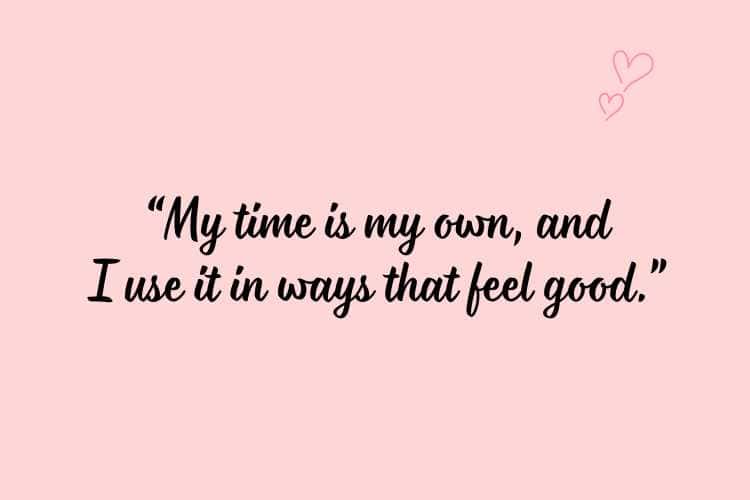
– My time is my own, and I use it in ways that feel good.
(Imagine your perfect day unfolding easily.)
– Small steps create beautiful momentum.
(Feel the pride of checking off your first little win of the day.)
Confidence Affirmations
Visualize yourself standing tall, moving confidently, making choices that support the life you want.
– I am capable, strong, and continually growing.
(Feel the steady strength in your chest.)
– My best years are unfolding right now.
(See yourself smiling, exploring, thriving.)
– I honor my needs, my pace, and my dreams.
(Visualize yourself saying yes to what lights you up.)
– I trust myself to make choices that support my happiness.
(Feel grounded, centered, and sure.)
– Everything I do matters, even the small things.
(Picture a ripple expanding outward — your actions create meaning.)
Purpose + Positivity Affirmations
Imagine yourself living with intentional joy — slow mornings, meaningful afternoons, peaceful evenings.
– I bring meaning to my days through intention and kindness.
(Feel your heart soften and open.)
– New experiences are always waiting for me.
(Visualize yourself stepping into something exciting — a new class, a trip, a hobby.)
– My life still holds endless opportunities to learn and grow.
(Feel curiosity rising inside you.)
– I let joy guide my decisions and my energy.
(Picture yourself saying yes to what feels light.)
– I am creating a life I love, one moment at a time.
(Sense the vibration of calm confidence expanding in your body.)
Emotional Balance Affirmations
Imagine releasing heaviness and welcoming peace — like exhaling tension and inhaling clarity.
– I release what no longer serves me and welcome calm.
(Feel a deep breath letting go of old weight.)
– I choose thoughts that keep me steady and strong.
(Picture your mind clearing like blue sky after clouds.)
– I am allowed to rest, reset, and begin again.
(See yourself curling up with comfort and softness.)
– Peace flows through my body and mind.
(Enhance the vibration by relaxing your shoulders.)
– I am proud of the life I am building each day.
(Visualize a beautiful path unfolding ahead of you.)
How To Stay Positive In Retirement
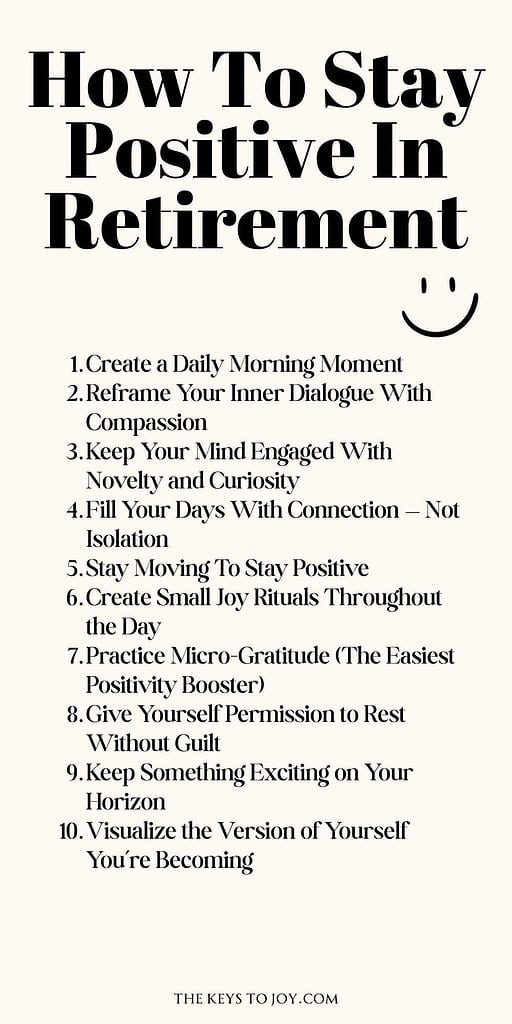
Staying positive in retirement isn’t about pretending everything is perfect — it’s about learning how to guide your mind, energy, and emotions toward what supports your well-being. Retirement brings freedom, but it also brings big shifts in identity, routine, and purpose. Feeling unsteady at times is completely normal. The good news? Positivity is something you can cultivate intentionally. Here’s how to build a joyful, steady Retirement Lifestyle that fills your days with meaning and ease.
1. Create a Daily Morning Moment That Lifts Your Vibration
Your morning sets your emotional baseline. A gentle ritual helps you choose your energy before the rest of the day influences it.
Try adding one uplifting practice:
– sit in sunlight for 5 minutes
– practice slow breathing
– read Words Of Wisdom
– sip your coffee mindfully
– write one gratitude sentence
Why it works:
Starting your morning on a positive frequency calms the mind, reduces stress, and supports emotional resilience. When you begin your day intentionally, you carry that steadiness through the hours that follow.
Motivational Quote For Success:
“The way you start your day is the way you live your day.”
2. Reframe Your Inner Dialogue With Compassion
Many retirees struggle because their inner voice becomes overly critical or fearful — especially when daily structure changes. Staying positive begins with speaking to yourself gently.
Swap thoughts like:
“I’m not doing enough” → “I get to choose how I spend my time.”
“I should be more productive” → “Rest and joy are part of my purpose now.”
“I’ve lost my spark” → “I’m discovering a new version of myself.”
Why it works:
Your inner voice is your most powerful motivator or your biggest saboteur. A compassionate mindset increases optimism and emotional balance.
Word of Wisdom:
“Speak to yourself like you would to someone you love.”
3. Keep Your Mind Engaged With Novelty and Curiosity
Positivity grows when you feel mentally stimulated. Learning new things keeps your brain flexible, your mood lifted, and your sense of purpose alive.
Try small, joyful challenges:
– learn a craft or creative hobby
– take a local class
– join a discussion group
– read about a topic you’ve always loved
– complete mini brain puzzles
– start a scrapbook, recipe book, or travel journal
Why it works:
Novelty releases dopamine — the feel-good chemical — and supports emotional well-being as you age.
This also ties beautifully into How To Stay Mentally Active In Retirement, which we’ll explore in the next chapter.
4. Fill Your Days With Connection — Not Isolation
Humans thrive through connection. Retirement can change your social landscape, making it even more important to nurture relationships intentionally.
Create gentle anchors like:
– weekly lunch with a friend
– morning walks with a neighbor
– joining a club, class, or community group
– family video calls
– a book club
– volunteering
Why it works:
Social connection lowers anxiety, boosts confidence, and helps you feel grounded and supported.
Retirement Quote:
“The greatest gift you can give your future self is staying connected.”
5. Stay Moving To Stay Positive
You don’t need intense workouts — gentle movement is enough to shift your emotional state. Physical activity supports brain health, releases endorphins, and increases mental clarity.
Try:
– morning walks
– stretching
– water fitness
– dancing in your living room
– chair yoga
– low-impact strength training
Why it works:
Movement changes your biochemistry. Within minutes, your mood lifts, stress decreases, and positivity rises naturally.
(We’ll go deeper into this in How To Stay Physically Active in Retirement.)
6. Create Small Joy Rituals Throughout the Day
Joy doesn’t appear randomly — it’s something you invite into your daily rhythm.
Try adding tiny joy anchors:
– lighting a candle before reading
– drinking tea on your porch
– adding fresh flowers to your home
– listening to your favorite playlist
– journaling in a beautiful notebook
– an afternoon treat you genuinely savor
Why it works:
These small rituals shift your emotional vibration and give your day shape, comfort, and meaning. They turn ordinary moments into beautiful ones.
7. Practice Micro-Gratitude (The Easiest Positivity Booster)
Instead of a long gratitude list, simply pause and notice one specific thing that brings you comfort or joy.
Examples:
– the warmth of your bed
– a handwritten note
– a quiet moment
– sunlight through the window
– a meal you enjoyed
Why it works:
Micro-gratitude strengthens neural pathways linked to optimism and helps your mind focus on what’s good rather than what’s missing.
Word of Wisdom:
“Gratitude doesn’t change what you have. It changes how you see it.”
8. Give Yourself Permission to Rest Without Guilt
Retirement isn’t about productivity — it’s about alignment. Some days your body and mind simply need more rest, quiet, or slowness.
Why it works:
Guilt drains positivity. Rest restores it.
True positivity comes from balance, not constant activity.
Tell yourself:
“I am allowed to slow down. My worth is not tied to doing more.”
9. Keep Something Exciting on Your Horizon
A trip, a class, a project, a family gathering, a new hobby — something you’re looking forward to keeps your mindset hopeful and your energy elevated.
Why it works:
Anticipation triggers the same feel-good chemicals your brain releases during the actual event. Even planning small things supports long-term positivity.
Motivational Quote For Success:
“Your future is still wide open. Let excitement lead the way.”
10. Visualize the Version of Yourself You’re Becoming
Visualization isn’t imagination — it’s emotional rehearsal.
Close your eyes and picture:
– the version of you who feels strong
– the version of you who feels peaceful
– the version of you who feels excited about life
Feel her energy.
Sense her confidence.
Imagine her smile.
Why it works:
Your brain doesn’t distinguish between imagination and experience. Visualization helps your mind accept new possibilities, strengthening optimism and motivation.
How To Stay Mentally Active In Retirement

Keeping your mind active in retirement isn’t just about avoiding boredom — it’s about keeping your brain sharp, your identity evolving, and your curiosity alive. A mentally active life supports confidence, emotional well-being, memory, and meaning. The best part? Staying mentally engaged in retirement doesn’t feel like work. It feels like joy, exploration, creativity, and growth — the heart of a fulfilling Retirement Lifestyle. Here’s how to keep your mind vibrant and optimistic in this new chapter.
1. Bring Learning Back Into Your Life in a Way That Feels Fun
Your brain loves novelty. Learning new things strengthens neural pathways and boosts dopamine, the “motivation chemical.”
Try activities that feel joyful, not pressured:
– cooking new recipes
– learning an instrument
– taking art or pottery classes
– exploring local history
– joining a language app
– attending community workshops
Why it works:
New skills challenge your brain in healthy ways, keeping it flexible and resilient. The goal isn’t perfection — it’s enjoying the process.
Word of Wisdom:
“Stay curious, and you’ll stay alive in every sense of the word.”
2. Choose Hobbies That Spark Creativity (They’re Brain Gold!)
Creative hobbies are some of the best ways to support mental sharpness. They stimulate problem-solving, planning, and imagination while keeping stress low.
Some favorites among hobbies for retired women:
– watercolor painting
– knitting or crocheting
– gardening
– scrapbooking
– candle making
– writing stories or journaling
– photography
Why it works:
Creative hobbies activate whole-brain thinking and help create new neural connections. They also bring joy — which boosts cognitive performance naturally.
A craft kit, paint set, or beautiful journal can make getting started feel exciting.
3. Make Social Connections Part of Your Mental Fitness Plan
Social interaction is one of the strongest predictors of brain health as we age. Conversations challenge memory, language skills, emotional intelligence, and creativity.
Try adding more connection to your week:
– join a book club
– attend a fitness or dance class
– invite someone for coffee
– volunteer at a school or community center
– join a local women’s group
– take part in group hobbies
Why it works:
Regular social engagement lowers the risk of cognitive decline and boosts happiness. Staying mentally active in retirement is easier when you’re not doing it alone.
4. Give Your Brain Mini Challenges (No Worksheets Required)
You don’t need hours of brain training — small bursts of challenge are enough to keep your mind sharp.
Fun micro-challenges:
– solve one puzzle
– play a memory game
– learn a new word
– try a brain-training app
– read one interesting article
– do a five-minute crossword
Why it works:
Short challenges activate new areas of the brain and keep cognitive processing strong. Think of them as little wake-up calls for your mind.
5. Strengthen Your Mind Through Movement
Physical activity is directly linked to cognitive health because it increases blood flow, oxygen, and neurochemical balance.
Try gentle movement paired with mental engagement:
– walking with a podcast
– yoga with guided breathing
– dance classes with music
– balance exercises that require focus
Why it works:
Movement supports memory, focus, and clarity. Staying mentally active is much easier when your body feels energized too.
This also ties beautifully into the next chapter on How To Stay Physically Active in Retirement.
6. Create a Weekly Brain-Boosting Routine (But Keep It Flexible)
A loose weekly rhythm helps ensure your mind gets regular stimulation without feeling overwhelmed.
Try something like:
– Monday: walking + podcast
– Tuesday: hobby day
– Wednesday: coffee with a friend
– Thursday: class or workshop
– Friday: puzzle or brain game
– Weekend: new experience (farmer’s market, museum, day trip)
Why it works:
Structure helps prevent drifting into Retirement Boredom, while flexibility keeps your days light and enjoyable.
7. Keep a “Curiosity List” to Stay Engaged With Life
Instead of a to-do list, create a Curiosity List — a list of topics, hobbies, places, and questions that spark interest.
Examples:
– “Learn about St. Augustine history”
– “Try watercolor florals”
– “Watch a documentary about whales”
– “Learn quick bread recipes”
– “Take photos of sunsets”
Why it works:
Curiosity is one of the most powerful forms of mental engagement. When you follow what lights you up, motivation becomes effortless.
Word of Wisdom:
“A curious mind never grows old.”
8. Reduce Mental Clutter to Increase Mental Clarity
A cluttered environment leads to a cluttered mind. Simplifying your space boosts focus, energy, creativity, and emotional balance.
Try:
– decluttering one drawer
– organizing your craft area
– cleaning digital folders
– creating a calm reading corner
Why it works:
Your brain is constantly scanning your surroundings. A cleaner, calmer space means a clearer mind.
9. Embrace Novelty Through Travel, Day Trips, and New Experiences
Exploring new places — even locally — stimulates your brain and keeps your mental world expanding.
Try:
– visiting a new town
– exploring a museum
– dining somewhere new
– taking a scenic walk in a new park
Why it works:
New environments challenge memory, navigation, social interaction, and observation — reinforcing mental sharpness.
10. Celebrate Your Growth, Not Just Your Achievements
Staying mentally active isn’t a checklist — it’s a lifestyle of growth. Celebrate progress, curiosity, and creativity.
Try ending each day with:
– one thing you learned
– one thing you enjoyed
– one thing you’re proud of
Why it works:
Reflection increases confidence, motivation, and emotional well-being, reinforcing your identity as someone who is continually evolving.
Retirement Quote:
“You’re not done growing. You’re just growing differently — and beautifully.”
How To Stay Physically Active in Retirement

You don’t need intense workouts or gym memberships to stay active in retirement. What you do need is movement that feels good, supports your energy, strengthens your body, and fits beautifully into your new rhythm. Staying physically active is one of the most important parts of a healthy Retirement Lifestyle — not for appearances, but for freedom, mobility, confidence, and long-term well-being. Here’s how to keep your body strong and your spirit lifted.
1. Start With Gentle, Consistent Movement (The Secret to Long-Term Health)
You don’t need to work out hard — you need to move often. Light, consistent activity has huge benefits: better balance, stronger muscles, improved heart health, clearer thinking, and boosted mood.
Try adding these into your daily rhythm:
– a 15–20 minute morning walk
– stretching while watching TV
– a slow yoga flow
– standing up every hour to move your body
Why it works:
Consistency creates strength. Small movements done daily are more effective than long workouts done occasionally.
Word of Wisdom:
“Movement is medicine — take a little each day.”
2. Explore Activities That Feel Fun, Not Forced
The best Retirement Activities are the ones that make you smile. When movement feels enjoyable, you stick with it naturally.
Fun options to explore:
– dancing in your living room
– water aerobics or swimming
– pickleball (gentle but social!)
– gardening
– low-impact cycling
– tai chi for balance and flow
– joining a walking club
Why it works:
Joyful movement reduces stress hormones and boosts endorphins — your body’s natural happiness chemicals.
3. Strengthen Your Body With Simple Resistance Exercises
Strength training isn’t just for younger people — it’s essential for retirees. Strong muscles support your joints, improve posture, protect your bones, and increase mobility.
Simple strength options:
– light dumbbells
– resistance bands (easy on joints and great for beginners)
– bodyweight movements like wall push-ups
– chair squats
– step-ups
Why it works:
Strength training improves balance, reduces fall risk, and helps you stay independent and active as you age.
4. Focus on Balance — It’s Your Most Important Fitness Skill
Balance isn’t just physical; it’s neurological. Training your balance keeps your brain sharp while protecting your body.
Try adding:
– standing on one leg while brushing your teeth
– slow heel-to-toe walking
– gentle tai chi routines
– balancing with a chair nearby for support
Why it works:
Good balance reduces injuries and keeps you confident in everyday movements.
Motivational Quote:
“Confidence comes from trusting your body.”
5. Listen to Your Body With kindness (Not Pressure)
As you age, your body communicates more clearly. Your role? Listen.
Some days you’ll want to walk far. Some days you’ll stretch. Some days you’ll rest. All are valid.
Why it works:
Honoring your energy helps you stay active long-term instead of burning out or forcing yourself into pain.
Tell yourself:
“My body is my guide, not my enemy.”
6. Use Movement to Support Your Mood and Energy
Movement is one of the most powerful tools for emotional health. It calms your mind, boosts mood, improves sleep, and increases positivity.
Try pairing movement with joy:
– walk while listening to uplifting podcasts
– stretch with calming music
– dance to your favorite oldies
– do evening yoga with soft lighting
Why it works:
Movement changes your chemistry — literally. It reduces stress hormones and increases feel-good neurotransmitters.
7. Turn Movement Into a Social Ritual
You’re more likely to stay active when you share it with someone else.
Try:
– scheduling weekly walks with a friend
– joining a local movement class
– attending senior yoga or swimming groups
– doing fitness challenges with family or neighbors
Why it works:
Social accountability increases consistency. And connection boosts happiness — making activity feel even better.
8. Make Your Home Movement-Friendly
Your environment shapes your habits. A few simple changes can make movement easier and more inviting.
Ideas:
– keep resistance bands in the living room
– roll out a yoga mat in a cozy corner
– set a small movement timer each afternoon
– keep walking shoes near the door
Why it works:
When movement is accessible, it becomes automatic — part of your natural Retirement Lifestyle.
9. Celebrate Progress, Not Perfection
Staying active isn’t about hitting goals — it’s about supporting your health and joy.
Celebrate small wins:
– “I walked today.”
– “I stretched this week.”
– “I feel more energetic.”
– “I tried something new.”
Why it works:
Positive reinforcement strengthens habits. Every bit of movement matters.
Word of Wisdom:
“The goal is not to be perfect — it’s to be present.”
10. Pair Physical Activity With Purpose
Purpose fuels motivation. Connect your movement to what you value.
For example:
– walk to improve heart health so you can play with grandkids
– stretch to ease stiffness so you can travel more comfortably
– strengthen your legs so you can hike scenic trails
– garden to enjoy nature while moving gently
Why it works:
Purpose turns movement into meaning. And meaning keeps you consistent.
Retirement Boredom: What To Do

Feeling bored in retirement doesn’t mean you’re doing anything wrong — it simply means you’re ready for a new rhythm, a new interest, or a new spark. Boredom is not a dead end; it’s a signpost pointing you back to yourself. If you’ve ever thought, “I’m retired and bored… now what?” you’re not alone. The shift from structure to freedom can be overwhelming, and without direction, even peaceful days can start feeling empty. Here’s how to turn Retirement Boredom into clarity, curiosity, and joy.
1. Reframe Boredom as a Message, Not a Problem
Boredom isn’t laziness — it’s your mind saying, “I’m ready for something meaningful.” When you view it as guidance instead of failure, you remove the guilt and open the door to new possibilities.
Why it works:
When you shift your mindset, your energy rises. You go from feeling stuck to feeling curious, which is the first step toward creating a richer Retirement Lifestyle.
Word of Wisdom:
“Boredom is a whisper from your soul asking for more connection, more joy, more life.”
2. Add One Fresh Experience to Your Week
Novelty is the antidote to boredom. It doesn’t have to be big, dramatic, or expensive. Just new.
Try:
– a new walking route
– a new recipe (bonus points for international!)
– a different grocery store
– visiting a local café
– exploring a park or small town nearby
– taking a class you’ve never tried
Why it works:
New experiences activate curiosity, confidence, and motivation — powerful tools for lifting yourself out of the Retired And Bored feeling.
3. Create a Weekly “Joy Plan” So Your Days Don’t Blend Together
Boredom often shows up when days lose shape. A simple weekly rhythm adds meaning without pressure.
Try building a rhythm like:
– Monday: movement + fresh start
– Tuesday: social connection
– Wednesday: hobby or creative hour
– Thursday: learning or class
– Friday: mini adventure
– Weekend: rest + something fun
Why it works:
Your brain thrives on gentle structure. This is one of the easiest Tips For Successful Retirement because it anchors your week with focus, purpose, and small excitements.
4. Choose a Hobby That Feels Fun, Not Forced
Hobbies are one of the best solutions for What To Do In Retirement — but only when they genuinely feel enjoyable. Avoid anything that feels like obligation.
Try hobbies that spark curiosity:
– watercolor nature scenes
– container gardening
– crafting, knitting, sewing
– photography
– journaling
– cooking projects
– puzzles or handcrafts
– making a family recipe book
Why it works:
Creative hobbies activate your brain’s reward centers, increase motivation, and give your days purpose. They also relieve stress and boost mood.
A beautiful craft kit or watercolor set can make starting exciting.
5. Join a Group — Your Boredom May Actually Be Loneliness in Disguise
Many retirees discover that boredom isn’t about having nothing to do, but about having no one to do it with.
Try:
– senior center classes
– walking or hiking groups
– dance or movement classes
– book clubs
– volunteer programs
– hobby meetups
– community workshops
Why it works:
Connection fills your emotional tank. It gives your days shape, stories, and shared memories — a powerful cure for Retirement Boredom.
6. Reconnect With Purpose Through Giving Back
If your career gave you meaning, retirement might feel flat until you reconnect with purpose again. Volunteering fills that gap beautifully.
Try:
– helping at a local school
– reading to children
– supporting an animal shelter
– community gardening
– mentoring young adults
– assisting at local museums or historical sites
Why it works:
Purpose is a natural antidote to boredom. When you feel useful, your energy rises. You feel part of something bigger than yourself.
7. Create a Mini Bucket List (Small, Daily Wins Only!)
Instead of a big bucket list that feels overwhelming, try a “micro-bucket list.”
Examples:
– visit five local bakeries
– try three new parks
– learn to make homemade soup
– watch one classic movie each week
– visit a botanical garden
– try a craft class
Why it works:
It gives you motivation and excitement without pressure — perfect for retirees who want joy in small, doable doses.
8. Get Outside Daily — Even for 5 Minutes
Nature is proven to reduce boredom, anxiety, and emotional fog.
Try:
– walking around your block
– drinking tea outside
– watching birds
– sitting in the sun
– tending to plants
Why it works:
Sunlight lifts your mood. Fresh air resets your nervous system. Nature sparks curiosity and movement — two essential ingredients for a fulfilling retirement.
9. Let Yourself Rest Without Feeling “Unproductive”
Sometimes what feels like boredom is actually exhaustion — from caregiving, decades of working, or years of stress. Rest is not the enemy. It’s the foundation for renewed energy.
Give yourself permission to:
– nap
– read without guilt
– enjoy slow mornings
– savor quiet afternoons
Why it works:
When you honor your energy, you recharge motivation. Rest creates the space for new interests to emerge naturally, not forcefully.
10. Start Something New You’ve Always Wanted to Try
If you’ve ever said, “One day I’ll…,” this is that day.
Try:
– taking a painting class
– starting a home project
– learning a language
– joining a movement group
– exploring photography
– planning a future trip
Why it works:
New beginnings create new energy — and boredom cannot survive where excitement lives.
Word of Wisdom:
“This chapter of your life is not empty — it’s open.”
You Might Also Like
- 111+ Positive Affirmations for Manifestation
- How To Structure Your Day In Retirement (With Joy!)
- 100+ Fun & Cheap Things To Do In Retirement Every Day