
Inner Child Healing Secrets That Will Set You Free!
Some links in this post are affiliate links. As an Amazon Associate, we earn from qualifying purchases that help keep our content free.
I’ve been on the journey of healing my inner child for over 15 years, and one thing I’ve learned is that healing isn’t a straight line—it’s a spiral. Old themes resurface, but each time they do, I meet them at a deeper level. What once felt raw and overwhelming now feels like an invitation to bring in more compassion and self-love.
Life as a digital nomad mama of two brings its own lessons. Our 5-year-old son is neurodivergent, and he mirrors back every subtle detail—every tone of voice, every shift of energy. It’s challenging, yes, but it’s also the fastest course in healing yourself. Add to that our curious 2-year-old daughter, and daily life becomes a blend of joy, chaos, and surprising wisdom.
And that’s the secret—inner child healing isn’t only about the past; it’s about learning to show up differently today. It’s about offering yourself the love, playfulness, and acceptance you might have missed, so you can create more ease, freedom, and joy right now.
In this guide, I’ll share the inner child healing secrets that helped me soften old wounds, embrace my sensitivity, and step into a life that feels magical and meaningful. You’ll find practices for self care, tips for reparenting your inner child, powerful inner child affirmations, plus inspiring inner child healing quotes and journal prompts to guide your journey.
Let’s dive in together and explore the practices that can help you set your inner child free.
Inner Child Healing
At its heart, inner child healing is about reconnecting with the part of you that still longs for safety, love, and play. It’s the tender voice inside that remembers what it felt like to be hurt, ignored, or misunderstood. When we pause and listen, we discover that this child isn’t gone—they’re still with us, waiting to be seen.
Healing your inner child goes beyond soothing childhood memories. Many of the wounds we carry are not just ours; they can run deeper—woven into our soul, DNA, and intergenerational stories. Patterns of fear, silence, or people-pleasing often echo through families, passed down without words. When you do the work of healing inner child, you aren’t only freeing yourself—you’re also rewriting the story for your children and future generations.
Sometimes this healing feels playful, like dancing barefoot in the grass or coloring in a journal with bright markers. Other times, it feels sacred, like sitting with the heaviness of grief or noticing where trauma still lives in your body. Every step matters. Even the smallest act of kindness toward yourself—whether it’s a whispered affirmation or a moment of quiet self care—creates space for transformation.
Things To Say To Soothe Your Inner Child
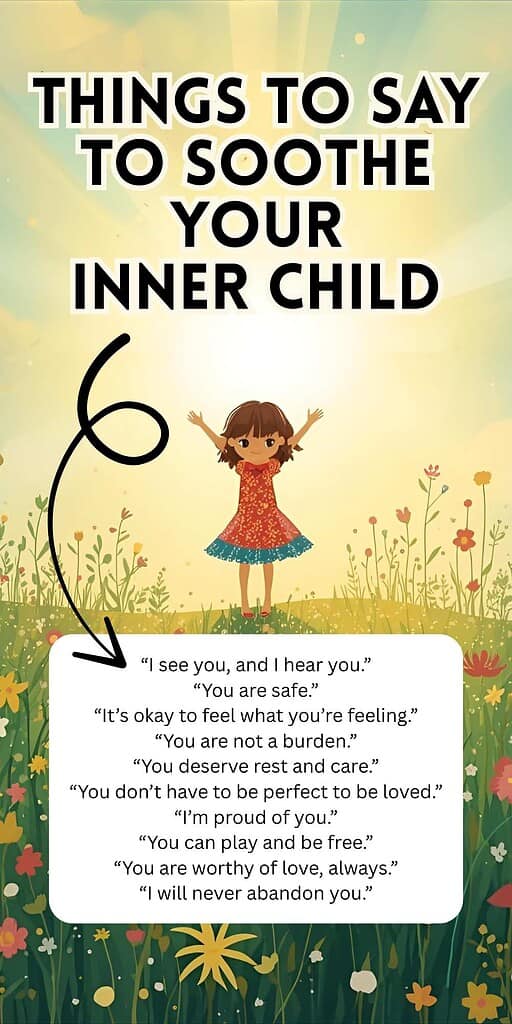
Sometimes your inner child just needs to hear the words they missed growing up. Speaking to yourself with kindness can calm old fears and create safety in the present moment. These gentle phrases act like a soft blanket for the soul, reminding your younger self they are safe, loved, and never alone.
Here are some things you can say to soothe your inner child:
- “I see you, and I hear you.”
- “You are safe.”
- “It’s okay to feel what you’re feeling.”
- “You are not a burden.”
- “You deserve rest and care.”
- “You don’t have to be perfect to be loved.”
- “I’m proud of you.”
- “You can play and be free.”
- “You are worthy of love, always.”
- “I will never abandon you.”
You can whisper these words during meditation, write them in your guided journal, or even repeat them as inner child affirmations in front of a mirror. Over time, these phrases begin to replace old stories of fear and shame with compassion and belonging.
The beautiful thing is, you don’t have to heal everything at once. Just like a spiral, you’ll revisit themes again, each time with more wisdom and compassion. Over time, your nervous system softens, your heart opens, and joy flows more freely. And that’s the true gift of inner child healing: creating the space to live more fully, freely, and lovingly in the present moment.
How To Heal From Childhood Traumas

Healing childhood traumas is one of the bravest journeys you can take. It doesn’t happen all at once—it unfolds in layers, like a spiral, where you revisit old themes with more wisdom and compassion each time. Here’s a step-by-step guide to support your path of inner child healing.
Step 1: Create Safety First
Trauma leaves the nervous system in a state of hypervigilance, always waiting for danger. That’s why safety must come before anything else. Start with simple breathwork. Try box breathing: inhale for four, hold for four, exhale for four, hold for four. Repeat until you feel your body soften. This tells your inner child, “I am safe now.” Surround yourself with comforting spaces—a warm blanket, a softly lit room, or a favorite scent. Safety is the foundation of all healing.
Step 2: Ground in the Present
Trauma lives in the body, often pulling you back into the past. Grounding reconnects you to the here and now. Walk barefoot in the grass, hold a stone in your hand, or wrap yourself in a weighted blanket that signals calm to your nervous system. Gentle movement like yoga or stretching helps release stored energy. Each grounding practice whispers to your body: “This moment is safe.”
Step 3: Seek Loving Support
You don’t have to do this alone. A trauma-informed therapist, somatic practitioner, or energy healer can hold safe space for your journey. Support isn’t about someone “fixing” you—it’s about walking alongside you with compassion. Sometimes the bravest thing you can do for your inner child is to let others in. This is part of healing inner child wounds that were created when you felt unseen or unheard.
Step 4: Allow Gentle Expression
Trauma silences the voice of your inner child. Healing means giving that voice room to speak again. Journaling is powerful—write letters to your younger self, or use a guided healing journal with prompts to spark reflection. Creative expression works too: paint with your fingers, dance in your living room, or sing without worrying how it sounds. These playful acts remind your inner child that their feelings matter.
Step 5: Nurture Your Soul
Some wounds run deeper than your own lifetime. They live in your DNA, passed through generations as unspoken fears or patterns of survival. You may find yourself carrying emotions that don’t belong only to you. Soul-level healing—through meditation, breathwork, or energy practices—helps clear these imprints. As you release these inherited stories, you create freedom not only for yourself but for your children and generations to come. This is why inner child healing is sacred work.
Step 6: Practice Daily Self Care
Healing requires consistency, not perfection. Daily self care rituals teach your inner child that they matter. This doesn’t have to be big—sip a cup of calming tea before bed, take a long bath, or spend ten minutes journaling. Imagine what your younger self longed for, and offer it now. Self care is how you build trust with yourself again.
Step 7: Reframe Old Stories
Trauma often leaves behind limiting beliefs: “I’m not enough,” “I don’t deserve love,” or “It’s my fault.” Begin noticing these thoughts with curiosity, not judgment. Then reframe them with gentle inner child affirmations like “I am worthy of love,” or “My needs matter.” Write them on sticky notes, speak them in front of a mirror, or include them in your gratitude practice. Over time, these new truths begin to feel real.
Step 8: Connect With Joy
Healing isn’t just about feeling the pain—it’s about remembering joy. Joy tells your nervous system that life is safe again. Try painting, playing music, or dancing with your kids. Plant flowers, cook your favorite meal, or laugh at a silly movie. Every time you choose joy, your inner child feels permission to come out and play. Joy is medicine.
Step 9: Rest and Integrate
Healing takes energy, and integration happens in stillness. Give yourself permission to nap, meditate, or simply lie under a blanket with no agenda. Rest is not laziness—it’s how your body weaves new patterns into your nervous system. Your inner child needs to know that rest is safe, allowed, and nourishing.
Step 10: Celebrate Small Wins
Healing isn’t measured in giant breakthroughs but in small shifts. Maybe you caught yourself speaking more kindly to yourself. Maybe you felt calmer in a stressful moment. These are victories. Celebrate them. Buy yourself flowers, light a candle, or write down what you’re proud of in your journal. Celebration reminds your inner child that progress matters and joy belongs to you.
Healing childhood traumas is a lifelong journey, but each step softens the weight of the past and opens more space for joy in the present. You don’t have to be perfect. You just have to begin.
Reparenting Your Inner Child

Reparenting your inner child means becoming the loving, safe, and supportive parent you always needed. It’s about showing up for yourself with compassion, boundaries, and playful presence. Here’s a step-by-step guide to begin reparenting in ways that bring more freedom and joy into your daily life.
Step 1: Acknowledge Their Presence
Your inner child is always with you, waiting to be seen. Start by acknowledging them—picture yourself at five or seven years old. Speak gently: “I see you. I’m here for you now.” This simple act of recognition builds trust and begins the process of healing inner child wounds.
Step 2: Offer Unconditional Love
Many of us longed for love without conditions. Reparenting means giving it now. Place a hand over your heart and repeat: “You are enough exactly as you are.” Surround yourself with nurturing rituals—like wrapping up in a cozy blanket or making yourself a warm drink. Each act tells your inner child: “You are worthy of love.”
Step 3: Set Gentle Boundaries
Children thrive with safe boundaries, and so does your inner child. Reparenting means saying no when something drains you, and yes when it nourishes you. Boundaries are acts of love, not rejection. Start small: leave work on time, decline that extra responsibility, or create quiet time for yourself. Your inner child learns: “My needs matter.”
Step 4: Create Playful Moments
Reparenting isn’t all serious—it’s about fun too. Paint with bright colors, blow bubbles, sing loudly, or dance around your living room. If you have kids, let their play invite you in. Inner child healing often happens faster through joy than through effort. Play reminds you life is safe and fun again.
Step 5: Provide Safety and Structure
Your inner child craves a sense of stability. Daily routines create that. Morning rituals like journaling, stretching, or sipping calming tea give predictability. Evening wind-down habits signal rest. Think of it as tucking your inner child into bed each night with care. Safety allows your nervous system to relax.
Step 6: Rewrite the Old Story
Reparenting gives you the chance to rewrite painful beliefs. When the inner critic says, “I don’t deserve this,” answer with loving truths: “I am worthy. I am safe. I belong.” Speak these inner child affirmations out loud or write them in your journal. With repetition, your inner child begins to believe the new story.
Step 7: Meet Their Needs Consistently
Children need consistency, not perfection. Reparenting means showing up daily, even in small ways. Ask yourself: what does my inner child need today? Maybe it’s rest, maybe it’s play, or maybe it’s a hug from yourself. Meeting those needs again and again builds a foundation of trust.
Step 8: Celebrate Progress Together
Finally, celebrate like you would with a child. Did you try something new? Did you honor your needs? Celebrate it! Light a candle, smile in the mirror, or write it down in your guided journal. Every celebration reminds your inner child that growth is joyful, not heavy.
Reparenting is not about being perfect. It’s about building a new relationship with yourself—one rooted in safety, joy, and unconditional love. Over time, this practice creates the inner home your child-self always dreamed of.
Inner Child Affirmations
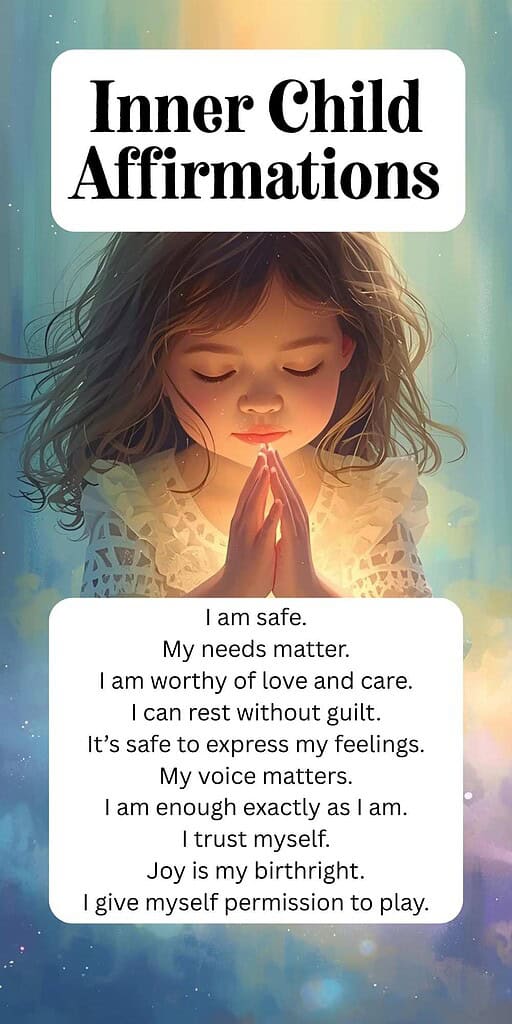
Words are powerful. They can either wound or heal, and for your inner child, they’re often the difference between fear and safety. Inner child affirmations gently rewire the stories you grew up believing—replacing shame or self-doubt with compassion, love, and freedom.
Think of affirmations as small love notes to your younger self. Each time you repeat them, you’re creating a new pathway in your brain and nervous system. Over time, your inner child begins to feel safe, cherished, and free to play again.
Here are some affirmations to begin with:
- I am safe.
- My needs matter.
- I am worthy of love and care.
- I can rest without guilt.
- It’s safe to express my feelings.
- My voice matters.
- I am enough exactly as I am.
- I trust myself.
- Joy is my birthright.
- I give myself permission to play.
How To Use Inner Child Affirmations
Speak them in the mirror
Stand in front of a mirror, look into your own eyes, and say one affirmation out loud. This can feel uncomfortable at first, but it’s deeply healing. Your inner child longs to be seen and heard.
Write them in your journal
Use a guided journal or even colorful pens and sticky notes. Writing your affirmations each morning reinforces them. Add them to your gratitude list for extra power.
Create a bedtime ritual
End your day with a soft affirmation, like “I am safe to rest.” Whisper it while tucked under a weighted blanket or sipping a cup of calming tea. It sends a message of safety to your nervous system before sleep.
Pair with breathwork
As you breathe deeply, repeat your chosen affirmation. Inhale, whisper “I am safe.” Exhale, “I am free.” This anchors the affirmation in your body.
Involve play
Draw or paint your affirmations in bright colors. Let your kids join in and make it a family ritual. This turns healing into a joyful practice.
Affirmations may seem simple, but repeated daily, they create profound shifts. They teach your inner child what they’ve always longed to hear: that they are safe, loved, and free to shine.
Inner Child Healing Journal Prompts
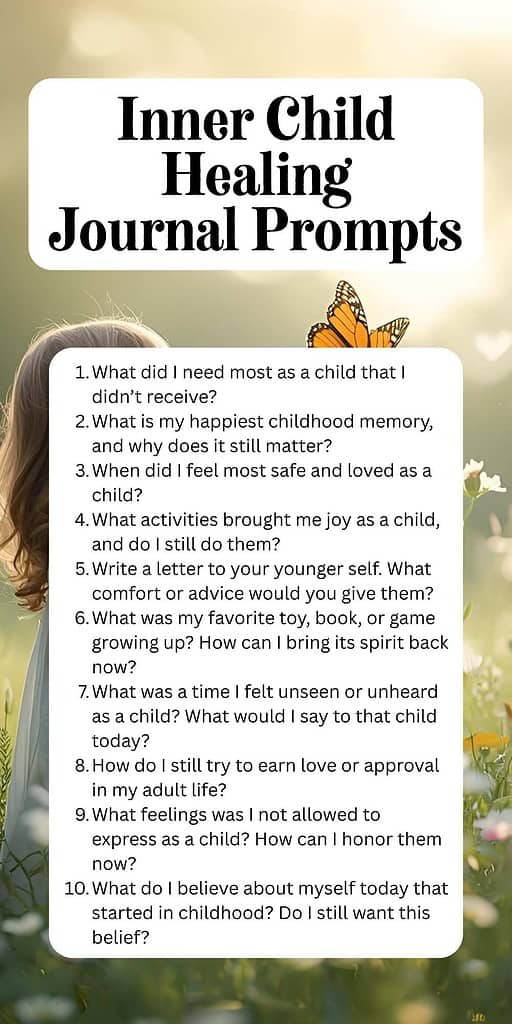
Journaling is one of the most powerful ways to reconnect with your inner child. These inner child healing journal prompts give your younger self a safe space to be seen, heard, and loved. Write freely, without judgment—your inner child deserves honesty, not perfection.
Here are 25 prompts to guide your healing journey:
- What did I need most as a child that I didn’t receive?
- What is my happiest childhood memory, and why does it still matter?
- When did I feel most safe and loved as a child?
- What activities brought me joy as a child, and do I still do them?
- Write a letter to your younger self. What comfort or advice would you give them?
- What was my favorite toy, book, or game growing up? How can I bring its spirit back now?
- What was a time I felt unseen or unheard as a child? What would I say to that child today?
- How do I still try to earn love or approval in my adult life?
- What feelings was I not allowed to express as a child? How can I honor them now?
- What do I believe about myself today that started in childhood? Do I still want this belief?
- Describe a childhood wound that still feels tender. What compassion can I bring to it?
- What do I admire most about my younger self?
- How does my inner child try to get my attention in daily life?
- If my inner child could speak freely, what would they ask me for right now?
- What kind of parent did I long for? How can I offer those qualities to myself now?
- What made me feel small or powerless as a child? How can I reclaim my power today?
- Write about a time I felt proud as a child. How can I celebrate myself like that now?
- What playful activity makes me lose track of time? How can I do it more often?
- How can I create more safety and stability for my inner child in my daily routine?
- What parts of myself did I hide as a child to fit in? How can I let them shine now?
- What words of encouragement would I give to my inner child before bed each night?
- Who made me feel loved as a child, and what did they do that mattered?
- How does my body still hold on to childhood pain? What gentle care does it need?
- What would my inner child’s dream day look like? How can I bring some of it into my life now?
- What promise can I make to my inner child today that I will keep?
How To Use These Prompts
- Choose one or two prompts each week instead of rushing through them.
- Write in a beautiful guided journal with colorful pens to make the process playful.
- Pair journaling with inner child affirmations to reinforce loving beliefs.
- Create a ritual: light a candle, sip a cup of calming tea, and give your inner child your full attention.
Each prompt is a doorway. The more you open these doors, the more your inner child feels safe to come forward with joy, creativity, and freedom.
Inner Child Healing Quotes
Sometimes the right words arrive like medicine for the soul. Inner child healing quotes remind us that we’re not alone in our journey. They inspire us to look inward with compassion and give our younger selves the love we always deserved.
Here are some uplifting, pin-worthy quotes to guide your path of healing inner child wounds and bringing more joy into everyday life:
- “Healing doesn’t mean the damage never existed. It means the damage no longer controls your life.” – Unknown
- “It’s never too late to have a happy childhood.” – Tom Robbins
- “The child within is waiting to be seen, heard, and loved.” – Unknown
- “When you nurture the child within, you heal generations before you and generations to come.” – Unknown
- “You don’t have to be perfect to deserve love. You just have to be you.” – Unknown
- “Caring for your inner child is as important as caring for a real child. You carry this child inside you for life.” – Louise Hay
- “Our sorrows and wounds are healed only when we touch them with compassion.” – Buddha
- “Your inner child holds the key to your joy. Listen closely, and they will show you the way.” – Unknown
- “Healing is not becoming the best version of yourself. It’s letting go of the idea that you needed fixing in the first place.” – Unknown
- “The most profound act of healing is to love yourself exactly as you are.” – Unknown
How To Use Quotes in Your Healing Journey
Pin them for daily reminders
Save your favorite inner child healing quotes on Pinterest boards so you can return to them whenever you need a boost.
Create visual reminders
Write them on sticky notes and place them on your mirror, fridge, or workspace. Each glance is a gentle invitation to reconnect with your inner child.
Use them in your journal
Pick a quote that resonates and reflect on it in your healing journal. Ask yourself: “What does this mean for me right now?”
Turn them into mantras
Some quotes can become mantras to repeat during meditation or before sleep. They anchor you into safety and love.
Quotes are like breadcrumbs—small reminders that guide you back to yourself. They help you pause, breathe, and remember that healing is possible, and joy is always within reach.
Closing Thoughts on Inner Child Healing
Healing your inner child is not about fixing what’s “wrong” with you—it’s about remembering what’s always been right. It’s a spiral, not a straight line. Some days feel playful and light, others may feel heavy, but every step brings you closer to freedom, compassion, and joy.
As a mama on this journey for over 15 years, I’ve learned that the secret is consistency, not perfection. Each moment of self care, each affirmation whispered, each page written in your journal, teaches your inner child: you are safe, you are loved, and you are free to shine.
If you’re ready to keep exploring, you might also love these reads:
- Self Care Mom Ideas That Feel Like Pure Magic ✨
- Positive Affirmations for Everyday Joy
- Gratitude Journal Prompts to Spark Happiness
Your inner child will thank you for every small step you take. 💛
👉 Save this pin now so you’ll always have these healing secrets close at heart.