
First Year of Retirement: How to Build a Life You Love
Some links in this post are affiliate links. As an Amazon Associate, we earn from qualifying purchases that help keep our content free.
The first year of retirement can be one of the most exciting chapters of your life, but it can also feel surprisingly unsettling. After years of work, routines, deadlines, and people depending on you, suddenly your days are yours. That freedom can feel wonderful, but it can also leave you wondering what comes next. In this guide, we’ll look at what to expect during your first year of retirement. So let’s get started!
What to Expect in Your First Year of Retirement

The first year of retirement often feels different from what people imagine.
At first, the freedom can feel amazing. No alarm clock. No commute. No deadlines. You finally have time for yourself.
But after a few weeks or months, the adjustment can become more noticeable.
You may miss:
- your daily routine
- regular contact with coworkers
- having clear goals
- feeling needed
- the identity connected to your career
This does not mean retirement is going badly.
It simply means life after retirement has a different rhythm, and it can take time to find it.
Some days may feel full and exciting.
Other days may feel strangely empty.
The key is not to fill every hour immediately. Give yourself time to discover what you actually enjoy now that your schedule is your own.
Your first year of retirement is not about getting everything right.
It is about learning what kind of retirement life feels right for you.
The Five Stages of Retirement

You may hear people talk about the five stages of retirement. They are not a strict rule, and not everyone experiences them in the same order, but they can help explain why retirement sometimes feels emotionally uneven.
1. Anticipation
Before retirement, you may feel excited, nervous, or both.
You are imagining freedom, travel, rest, and more control over your time.
2. The Honeymoon
The first weeks or months can feel like a long vacation.
You sleep in, make plans, enjoy having no schedule, and finally do things you never had time for.
3. Disenchantment
This is where some retirees start wondering:
“Is this it?”
The novelty wears off, and the lack of routine, purpose, or social contact can become more noticeable.
4. Reorientation
You begin experimenting.
You try new routines, hobbies, friendships, volunteering, travel, exercise, or part-time work.
Slowly, you discover what fits.
5. Stability
Eventually, retirement starts to feel less like a transition and more like normal life.
You have your own rhythm, priorities, and routines.
The most important thing to remember is that there is no correct timeline.
You may move back and forth between these stages, especially when life changes.
Retirement is not one big adjustment.
It is something you gradually grow into.
What to Do After Retirement

If you are wondering what to do after retirement, start by building a few simple anchors into your week.
You do not need a packed schedule. You just need enough structure to keep your days from feeling empty.
Try to include:
- Movement: walking, strength training, swimming, yoga, or anything you enjoy
- Connection: lunch with a friend, family time, a club, church, or community group
- Purpose: volunteering, helping others, mentoring, or working on a meaningful project
- Fun: hobbies, day trips, gardening, reading, music, or travel
- Growth: learning a language, taking a class, or trying something new
Build a Simple Weekly Rhythm
A loose routine can make retirement feel much easier.
For example:
- Monday: exercise and errands
- Tuesday: hobby or class
- Wednesday: lunch with a friend
- Thursday: volunteering or a personal project
- Friday: something fun
- Weekend: family, travel, or rest
These are simple steps to take after retirement, but they can make a big difference.
The goal is not to stay busy for the sake of being busy.
It is to create a life with enough movement, connection, purpose, and enjoyment that your days feel like they belong to you.
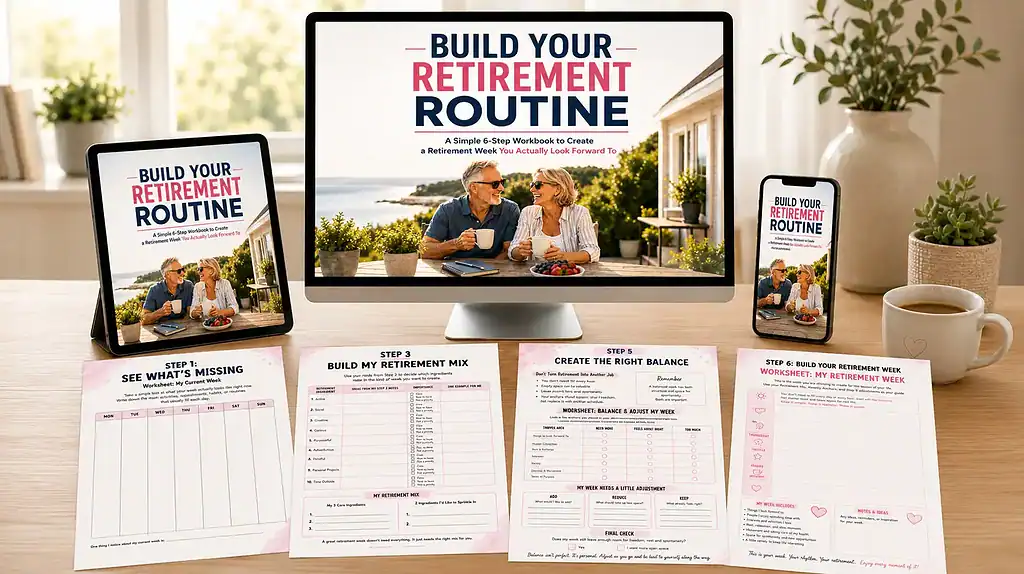
If you would like a little help creating that new rhythm, [Build Your Retirement Routine] can guide you through your goals, routines, ideas, and plans for this next chapter, without making retirement feel like another job.
What to Do When Retired and Every Day Feels the Same
One of the most common surprises in retirement is how quickly the days can start blending together.
At first, having no schedule feels freeing.
Then Tuesday starts to feel a lot like Thursday.
If you are wondering what to do when retired and every day feels the same, the answer is usually not to fill every hour.
It is to add a little more variety and anticipation.
Add a Few Weekly Anchors
Choose a few things that happen regularly:
- a morning walk
- lunch with a friend
- a weekly class
- volunteering
- a hobby group
- an exercise session
- a regular outing with your partner
These give your week shape without making it feel like another work schedule.
Always Have Something to Look Forward To
It does not need to be a big vacation.
Plan small things too:
- a new restaurant
- a day trip
- a museum visit
- a movie night
- a hike
- trying a new recipe
- visiting family
- starting a small project
Having something on the calendar can make an ordinary week feel completely different.
Look for Purpose, Not Just Entertainment
Retirement cannot be endless entertainment.
Most people also need to feel useful, challenged, or connected to something bigger than themselves.
That might come from:
- helping family
- volunteering
- mentoring someone
- caring for a garden
- learning something difficult
- creating something
- supporting your community
You do not need one grand purpose.
You just need a few reasons to get up in the morning that feel meaningful to you.
The goal is not to make every day exciting.
It is to create enough variety, connection, and purpose that your retirement does not start feeling like the same day on repeat.
Your First Year of Retirement: Month by Month

Your first year of retirement does not need a strict plan, but having a simple focus for each month can help you adjust without feeling lost.
Month 1: Decompress
Give yourself permission to slow down.
Sleep more. Take walks. Enjoy quiet mornings. Let your body and mind adjust after years of work and routine.
Month 2: Explore
Try a few things you never had time for before.
Visit somewhere new, take a class, start a hobby, or spend more time outdoors.
Month 3: Build a Routine
Start creating a loose weekly rhythm.
Add a few regular anchors such as exercise, errands, hobbies, social plans, and rest.
Month 4: Reconnect
Reach out to old friends, family members, former coworkers, or neighbors.
Social connection matters more than many retirees expect.
Month 5: Try Something New
Choose one thing that feels slightly outside your comfort zone.
A new class, volunteer role, sport, club, or creative project can add fresh energy to retirement.
Month 6: Review What Is Working
Halfway through your first year, pause and ask:
- What do I enjoy most?
- What feels boring?
- Am I too busy or not busy enough?
- Do I feel connected?
- What would I like more of?
Adjust your routine if needed.
Month 7: Focus on Your Health
Use some of your new freedom to invest in your body.
Walk more, strength train, improve your sleep, cook more nourishing meals, or schedule appointments you have been putting off.
Month 8: Plan an Adventure
This does not need to be a big trip.
Plan a weekend away, day trip, road trip, visit to family, or something new in your own area.
Month 9: Add More Purpose
If retirement still feels a little empty, look for something meaningful.
Volunteer, mentor someone, help in your community, care for family, or start a project that matters to you.
Month 10: Strengthen Your Social Life
Make connection more intentional.
Invite someone for coffee. Join a group. Plan regular lunches. Reconnect with someone you miss.
Month 11: Reflect
Think about how much has changed since your last day at work.
What have you learned about yourself?
What surprised you?
What do you want your second year of retirement to look like?
Month 12: Celebrate Your One Year Retirement Anniversary
Your One Year Retirement Anniversary is a great moment to celebrate.
Do something that marks the occasion.
Take a trip. Have dinner with people you love. Write down your favorite memories from the year. Or simply spend the day doing something that reminds you why you wanted to retire in the first place.
Then ask yourself one simple question:
What do I want more of next year?
Your first year of retirement is not about creating the perfect new life.
It is about experimenting, adjusting, and slowly discovering what makes retirement feel like your own.
How to Enjoy Retirement More

If you are wondering how to enjoy retirement, the answer is usually not to stay busy every minute.
It is to create a life that feels balanced.
Make room for:
- rest
- fun
- meaningful relationships
- movement
- learning
- purpose
- spontaneity
- quiet time
Stop Trying to Be Productive All the Time
You spent years working toward retirement.
You do not need to justify every hour now.
It is okay to read in the middle of the day, sit outside with coffee, take a nap, or do absolutely nothing for a while.
Rest is part of retirement too.
Keep Some Structure, But Leave Space
A little routine can make life after retirement feel grounded.
But too much structure can make retirement feel like another job.
Leave room for last-minute plans, slow mornings, travel, and changing your mind.
Keep Trying New Things
One of the best What To Do In Retirement Ideas is simply to stay curious.
Try:
- a new hobby
- a class
- a new walking route
- a volunteer opportunity
- a different kind of travel
- a creative project
- something you always thought you were “too old” to start
You do not need to become good at everything.
You just need to keep discovering what gives you energy.
Let Retirement Change With You
What you enjoy in your first year may be completely different from what you want five years later.
That is normal.
Your retirement does not need one fixed formula.
Keep asking yourself:
What is working? What is missing? What do I want more of now?
The best retirement is not the busiest one.
It is the one that feels like your life.
Your First Year Is Just the Beginning
The first year of retirement is not about figuring everything out.
It is about learning what this new stage of life feels like, what gives your days meaning, and what kind of rhythm works for you now.
Some parts may come easily.
Others may take time.
You may change your routine, your plans, your hobbies, your social life, or even your idea of what retirement should look like.
That is part of the process.
Retirement is not a single moment.
It is a life you gradually build.
So give yourself room to experiment, adjust, and enjoy the freedom you worked so hard to create.
