

100+ Shadow Work Questions To Transform Your Life 💫
Some links in this post are affiliate links. As an Amazon Associate, we earn from qualifying purchases that help keep our content free.
Shadow work has been part of my life for over 15 years, and I can honestly say it has transformed me in ways I never imagined. It’s not always easy to face the parts of ourselves we usually keep hidden, but it’s in those moments of honesty that the deepest healing happens.
Raising a very sensitive 5-year-old boy and a 2-year-old girl has reminded me again and again how important inner child work is. Kids live so openly in their emotions, and it reflects back the places where we, as adults, may still need healing.
That’s where shadow work questions come in. These simple yet powerful prompts can guide you toward inner healing, self-discovery, and a deeper sense of wholeness. Think of them as gentle invitations to explore the hidden corners of your heart, so you can bring more light, joy, and meaning into everyday life.
In this post, I’ll share over 100 thoughtful shadow work questions and journal prompts to help you on your journey. Whether you’re brand-new and curious about shadow work for beginners or you’ve been journaling for years, these questions will meet you where you are.
Grab your favorite pen, cozy up with a warm drink, and let’s dive into this journey of self-discovery together. 💫
100+ Shadow Work Questions for Deep Inner Exploration
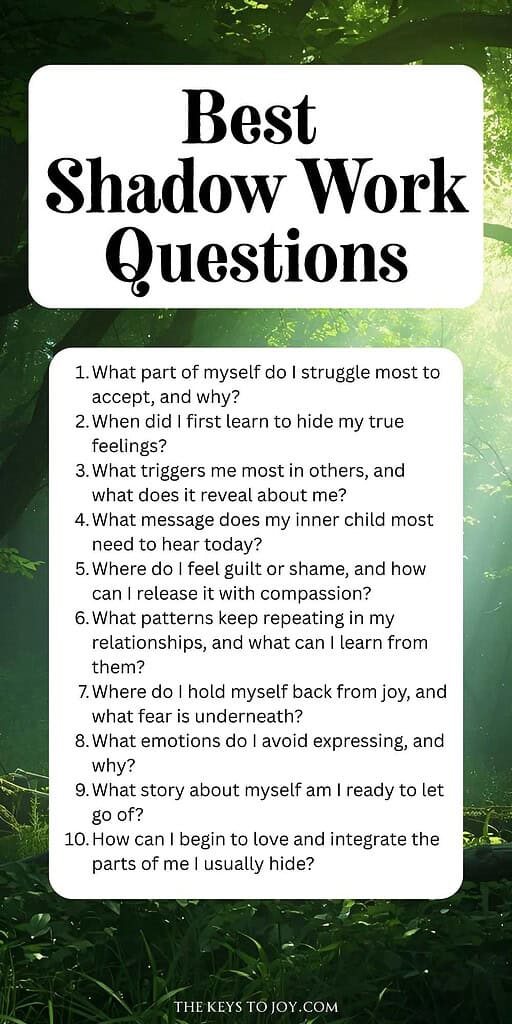
Shadow work can sound mysterious, but at its heart, it’s about getting real with yourself. It’s the practice of looking at the emotions, beliefs, and memories you’ve tucked away—the parts you may have been taught to hide. By asking yourself the right questions, you shine light on those hidden corners and give them space to heal.
These shadow work questions aren’t meant to judge or criticize you. They’re invitations to understand yourself more deeply and practice inner healing. When you approach them with curiosity and compassion, they can be life-changing.
The right questions can help you peel back the layers of your inner world. Use these shadow work journal prompts as invitations to explore hidden emotions, limiting beliefs, and the parts of yourself you’re ready to heal. Take your time—one question a day is more than enough.
Inner Child Work & Healing My Inner Child
- What did I most need as a child that I didn’t always receive?
- What activities made me feel most alive when I was little?
- Who made me feel safe growing up, and how?
- What childhood memory still carries weight in my heart?
- What did I want to say but couldn’t as a child?
- How did my family express love, and how did it shape me?
- Where do I still seek approval like I did as a child?
- How can I show kindness to my inner child today?
- What role did I take on in my family?
- What did I believe about myself as a child that I still believe today?
Self-Awareness & Triggers
- What traits in others trigger me most, and why?
- When do I overreact, and what’s underneath that?
- Where do I struggle to set boundaries?
- When do I feel like I’m pretending to be someone I’m not?
- What emotions do I avoid showing others?
- What makes me defensive, and why?
- What do I criticize in others that I secretly see in myself?
- What part of me am I ashamed of others noticing?
- Where do I feel powerless in my life?
- What habits keep me from growing?
Relationships & Connection
- What patterns repeat in my relationships?
- How do I react when I feel rejected?
- Where do I fear intimacy, and why?
- How do I sabotage my relationships?
- Who do I still need to forgive, and what holds me back?
- How do I act when I’m afraid of being abandoned?
- What old wounds show up in my friendships?
- What kind of people do I attract, and what does it reflect?
- Where do I feel resentful in relationships?
- What kind of love do I believe I deserve?
Self-Love & Acceptance
- What parts of myself do I struggle to accept?
- Where do I hold myself back from joy?
- What makes me feel unworthy of love?
- How do I talk to myself when I make a mistake?
- What compliments do I struggle to accept?
- Where do I place impossible expectations on myself?
- What’s one thing I forgive easily in others but not in myself?
- What do I believe I have to hide to be loved?
- What activities make me feel most like myself?
- How can I practice more compassion toward myself?
Fear & Limiting Beliefs
- What fears hold me back from pursuing my dreams?
- What’s the worst story I tell myself about who I am?
- Where do I feel “not enough”?
- What beliefs about money limit me?
- What beliefs about love hold me back?
- Where do I fear failure most, and why?
- Where do I fear success, and why?
- What lies do I tell myself to stay comfortable?
- What’s the first memory of feeling fear?
- Where do I cling to control out of fear?
Healing & Forgiveness
- Who do I still carry anger toward, and why?
- What part of me most needs forgiveness?
- What does forgiveness mean to me?
- Where do I still feel guilt or shame?
- What apology do I wish I could receive?
- What apology do I need to give myself?
- Where do I hold grudges, and what does it cost me?
- What wound am I afraid to face?
- What memories feel unresolved in my life?
- How can I release past pain with love?
Identity & Self-Discovery
- What stories do I tell myself about who I am?
- Who am I when no one else is around?
- What masks do I wear in daily life?
- What values guide me, and are they truly mine?
- What dreams have I given up on, and why?
- What labels have I outgrown but still cling to?
- What role do I play for others that hides my truth?
- What am I most afraid others will discover about me?
- Where do I shine the brightest in life?
- What would I do if I felt no fear of judgment?
Emotions & Expression
- What emotions do I suppress most often?
- How do I react when I feel vulnerable?
- What emotion feels the hardest to express?
- What emotion comes easiest to me?
- Where do I use anger as protection?
- How do I handle sadness?
- When do I feel most free to express myself?
- What situations silence me?
- How do I comfort myself when I feel hurt?
- What would happen if I expressed my full truth?
Growth & Transformation
- What areas of my life need the most healing?
- Where am I resisting change, and why?
- What beliefs do I need to let go of?
- What lessons keep repeating in my life?
- Where do I feel most disconnected from myself?
- What vision do I hold for my future self?
- What am I most afraid of becoming?
- What am I most excited to grow into?
- What part of me is ready to transform right now?
- What does true healing look like for me?
Spiritual & Shadow Work Spiritual
- Spiritual & Shadow Work Spiritual
- How can I integrate my shadow with love?
- How do I connect with my higher self?
- What role does spirituality play in my healing?
- What shadow qualities are actually gifts in disguise?
- How do I honor both light and shadow within me?
- Where do I feel most connected to something greater?
- What spiritual beliefs no longer serve me?
- What does wholeness mean to me?
- How does my shadow self try to protect me?
- What wisdom is hidden in my shadow?
- What message does my shadow have for me right now?
💡 Pro tip: Keep these shadow work questions in a dedicated work journal so you can revisit them later. Many readers love using a guided shadow work journal or printable therapy journaling prompts deck to stay consistent and inspired.
Journaling your answers is where the magic happens. The act of writing helps your subconscious surface truths you might otherwise overlook. Many people find that using a dedicated shadow work journal makes it easier to keep track of insights and see how their growth unfolds over time. Pairing it with therapy journaling prompts or even a beautiful guided shadow work notebook can give you extra inspiration when you feel stuck.
To deepen the experience, try creating a little ritual around your journaling practice. Light a calming soy candle, sip on herbal tea, and use a pen you love. Small touches like these make shadow work feel nurturing rather than heavy—and you’ll be more likely to keep showing up for yourself.
Writing Therapy: Healing Through Words

One of the most powerful tools for shadow work is writing therapy. When you put pen to paper, you’re not just writing—you’re giving your subconscious a safe space to speak. Thoughts and emotions that may feel tangled in your head often become clearer the moment they land on the page.
Think of your journal as a trusted friend, one who listens without judgment. The simple act of writing slows your thoughts down, helping you process memories, fears, and patterns in a way that feels grounding. That’s why many people consider therapy journaling prompts an essential part of their healing journey.
Here’s how writing therapy can support your shadow work practice:
- It helps you explore deep emotions safely.
- It creates space for reflection, rather than reaction.
- It allows you to see patterns you might otherwise miss.
- It strengthens your connection to your inner child by letting their voice come through.
To make this practice more joyful, set up a little ritual. Light a candle, grab your favorite drink, and open a dedicated shadow work journal. Some people find it helpful to use a guided work journal with shadow work spiritual prompts already built in, while others prefer blank pages where creativity flows freely.
If you ever feel stuck, try pairing your journaling with shadow work quotes that inspire deeper reflection. Writing them down and adding your thoughts around them can turn into a beautiful practice of inner healing.
Most importantly, be gentle with yourself. Shadow work doesn’t need to be rushed. Some days you’ll write pages; other days, just a few sentences will feel like enough. Every word you write is a step toward more self-awareness and self-love.
How To Do Shadow Work

Shadow work might sound intense, but at its core, it’s about self-discovery and compassion. It’s the practice of gently meeting the parts of yourself you’ve hidden away—old fears, limiting beliefs, or painful memories—so you can heal and grow. When you know how to do shadow work, you unlock a path to greater joy, self-love, and emotional freedom.
The best part? You don’t need to be a spiritual expert or spend hours meditating. With just a few simple steps, you can create a meaningful shadow work practice right from home.
Step 1: Create Your Space
Choose a quiet spot where you feel safe and comfortable. Light a soothing candle, play soft music, or wrap yourself in a cozy blanket. Making your practice feel nurturing sets the tone for shadow work spiritual reflection.
Step 2: Set an Intention
Take a moment to ground yourself. Close your eyes and say: “I am ready to welcome all parts of myself with love.” This intention reminds you that shadow work is about healing, not judging.
Step 3: Pick a Prompt
Start with a single shadow work question or choose one from a guided shadow work journal. If you’re new, begin with lighter topics, such as “When did I feel most safe as a child?” These therapy journaling prompts create gentle entry points.
Step 4: Write With Openness
Grab your pen and let the words flow. Don’t edit or second-guess yourself. The magic of writing therapy is that hidden truths often rise when you give yourself permission to be completely honest.
Step 5: Reflect and Breathe
Once you finish, read your words back with kindness. Ask yourself: “What is this part of me really asking for?” This reflection is where true inner healing begins.
Step 6: Close With Care
Shadow work can stir big emotions. Balance it with grounding practices—sip herbal tea, stretch, or hold a calming stone. Many people love keeping a dedicated work journal or pairing their practice with crystal sets that bring a sense of peace.
Remember, shadow work isn’t about rushing through 50 questions in a week. Even 10 minutes a day with one question can shift your perspective over time. When you consistently show up, you’ll begin to feel lighter, more aligned, and more connected to your authentic self.
How To Start Shadow Work

Beginning shadow work can feel like stepping into the unknown. You might wonder what memories, emotions, or truths will surface—and that’s perfectly normal. Shadow work is not about forcing yourself into discomfort; it’s about building trust with yourself, slowly and gently. Think of it as shining a small flashlight into hidden corners of your heart, one step at a time.
The beauty of shadow work is that it grows with you. You don’t need to “do it all” at once. Even small reflections create big shifts over time. Here’s how to start in a way that feels safe, supportive, and meaningful:
Start Small and Gentle
You don’t need a full hour or an elaborate setup. Begin with just 5–10 minutes of writing time. Pick one shadow work question and answer it honestly. If you feel resistance, remind yourself that this is a process, not a race. Sometimes even a single sentence holds the key to powerful inner healing.
Use Beginner-Friendly Prompts
For your first steps, choose softer therapy journaling prompts that ease you into reflection. Here are a few ideas:
- What makes me feel safe and loved right now?
- What activities bring me joy and calm?
- What did I need most as a child that I can give myself today?
Prompts like these connect you with your inner child and open the door to healing without overwhelming you.
Create a Supportive Routine
Consistency helps shadow work become a grounding practice. Decide when you’ll journal—maybe with morning coffee, during a quiet nap time if you have kids, or before bed. Keep a dedicated shadow work journal or work journal nearby so it becomes a special part of your day.
Make It Ritual-Like
Shadow work can feel heavy if you dive in without intention. Turn it into a nurturing ritual by lighting a calming candle, sipping herbal tea, or even keeping shadow work quotes on your desk for inspiration. These small rituals signal to your mind and body that this is a safe and sacred space.
Be Honest, Not Harsh
Shadow work is about honesty, not judgment. When you notice difficult emotions, write them down with compassion. For example, instead of “I shouldn’t feel this way,” try “This feeling is asking me to notice it.” Treat your writing as a gentle conversation with yourself.
Know When to Pause
If a prompt brings up strong emotions, it’s okay to step back. Take a walk, breathe deeply, or close your journal until you feel ready again. Shadow work is meant to support your inner healing, not overwhelm you.
Celebrate Small Wins
Every page you write is progress. Every insight you uncover is a step toward freedom. Even if it feels small, acknowledge it. This practice builds resilience and helps you approach deeper shadow work spiritual reflections over time.
✨ The truth is: starting shadow work is about courage, not perfection. By showing up for yourself with love, curiosity, and patience, you’ll begin to transform the way you see yourself. One day, you’ll look back at those first journal pages and smile at how far you’ve come.
Shadow Work For Beginners

If you’re brand new to shadow work, you might feel both curious and a little unsure about where to start. That’s completely normal. Shadow work can sound heavy, but at its core, it’s about learning to embrace every part of yourself—even the pieces you’ve hidden away. When you approach it gently, shadow work becomes a beautiful path toward self-love and inner healing.
The good news? You don’t need to be an expert in psychology or spirituality to begin. Shadow work for beginners is all about taking small, intentional steps and using tools that support you along the way.
What Is Shadow Work for Beginners?
At its simplest, shadow work is a form of self-reflection. It helps you look at emotions, patterns, and memories you might have suppressed. Instead of pushing them away, you bring them into the light with compassion. For beginners, this usually means starting with gentle shadow work questions and building a safe journaling practice.
Why Shadow Work Matters
Your shadow often holds the key to your greatest growth. Think of it as the part of you that still carries unhealed stories from the past. By connecting with your inner child through writing therapy and therapy journaling prompts, you begin to understand yourself more fully. The result? More self-awareness, deeper relationships, and a lighter heart.
Beginner-Friendly Tips to Get Started
- Keep It Simple: Start with 5–10 minutes of journaling a day.
- Pick Gentle Prompts: Questions like “What made me happiest as a child?” or “Where do I feel most at peace?” are perfect for beginners.
- Use a Shadow Work Journal: Having a dedicated work journal keeps your reflections in one place and makes the process feel intentional.
- Create a Ritual: Light a calming candle, play soft music, or surround yourself with objects that feel safe. These little details turn your practice into a nourishing ritual.
- Go At Your Own Pace: There’s no rush. Shadow work for beginners should feel like exploration, not pressure.
Tools to Support You
Many people find it easier to stay consistent with a guided shadow work journal or printable shadow work journal prompts deck. You can also keep shadow work quotes nearby for inspiration when you’re unsure what to write. Adding supportive items like aromatherapy candles or a small crystal set can make your practice feel grounding and joyful.
✨ Shadow work for beginners isn’t about perfection. It’s about showing up with curiosity, honesty, and compassion. Every small step—every page you write—brings you closer to healing, self-love, and a more joyful life.
Shadow Work Journal Prompts

A big part of shadow work is journaling. When you write things down, you give your subconscious a safe space to speak. That’s why using shadow work journal prompts is such a powerful way to begin your healing journey.
Think of prompts as gentle invitations. They guide you to reflect on hidden patterns, emotions, and memories you may not have explored before. With time, these small questions can lead to profound moments of inner healing and self-discovery.
Here are some inspiring prompts to explore in your shadow work journal. You don’t need to rush through them—pick one a day, or even one a week, and let the insights unfold naturally.
Beginner-Friendly Prompts
- What made me feel safe as a child?
- When do I feel most like myself?
- What activities bring me peace and joy?
- What compliments am I uncomfortable receiving, and why?
- Where do I hold myself back from happiness?
Inner Child Work Prompts
- What did I need most as a child that I didn’t receive?
- What moments from childhood still feel tender?
- How can I care for my inner child today?
- What did I love to do as a child, and do I still do it?
- What message does my younger self need to hear from me now?
Healing and Self-Awareness Prompts
- What part of myself am I afraid to show others?
- Where do I still carry guilt or shame?
- What do I judge most harshly in others, and what does it say about me?
- What patterns repeat in my relationships?
- What belief about myself no longer serves me?
Deeper Reflection Prompts
- Where do I fear my own power, and why?
- What emotions do I avoid expressing?
- What story from my past am I still holding onto?
- What does forgiveness mean to me?
- What steps can I take to love every part of myself?
💡 Pro Tip: To stay inspired, keep a dedicated work journal just for shadow work. Many people love guided shadow work journals or printable therapy journaling prompts cards for structure. Pairing your practice with shadow work quotes can also spark powerful insights when you feel stuck.
✨ Remember: you don’t have to answer every question right away. Shadow work is a lifelong journey. Take your time, be gentle with yourself, and let the process bring more clarity, healing, and joy into your everyday life.
Closing Thoughts
Shadow work isn’t about fixing yourself—it’s about embracing every part of who you are. With the right shadow work questions and journal prompts, you can gently uncover hidden patterns, connect with your inner child, and experience deep inner healing. Over time, these reflections open the door to more clarity, love, and joy in everyday life.
If you loved exploring these prompts, you may also enjoy:
- Inner Child Healing Secrets That Will Set You Free!
- How to Heal Yourself—Simple Steps for Inner Joy ✨
- Gratitude Journal Ideas You Haven’t Tried (But Should!)
Each of these practices blends beautifully with shadow work, helping you create more ease, magic, and meaning in your daily life.
✨ Save this pin now and come back anytime you’re ready to dive deeper into your shadow work journey.