
21 Honest Reasons to Retire in Portugal (by a local)
Some links in this post are affiliate links. As an Amazon Associate, we earn from qualifying purchases that help keep our content free.
Thinking about retiring in Portugal? We live half of the year in Portugal ourselves, so this guide goes beyond the usual sunshine and beaches. Here are 21 practical reasons Portugal can be a great place to retire, along with a few things worth knowing before you make plans. Let’s go!
1. Portugal Has a Mild and Sunny Climate

The climate is one of the biggest reasons Americans choose to retire in Portugal. Winters are generally mild, while spring and fall often bring pleasant weather for walking, gardening, eating outside, and visiting the coast.
However, the weather is not the same across the country. Northern Portugal is cooler, greener, and wetter. Central Portugal has warm summers but can feel cold during winter, especially inland. The Alentejo is dry and can become extremely hot in July and August. The Algarve has some of the mildest winters on the mainland, while Madeira offers comfortable temperatures throughout most of the year.
Portugal receives plenty of sunshine, but that does not mean every home feels warm during winter. Many older Portuguese houses have limited insulation, no central heating, and problems with dampness.
Before choosing a location, visit during both summer and winter. A town that feels perfect in May may feel damp, quiet, windy, or cold in January.
Read more: Retirement in Portugal: A Complete Guide for Americans
2. You Can Choose From Very Different Landscapes

Portugal may look small on a map, but its landscapes vary considerably. You can live near dramatic Atlantic cliffs, wide sandy beaches, vineyards, forests, mountains, lakes, or quiet farmland.
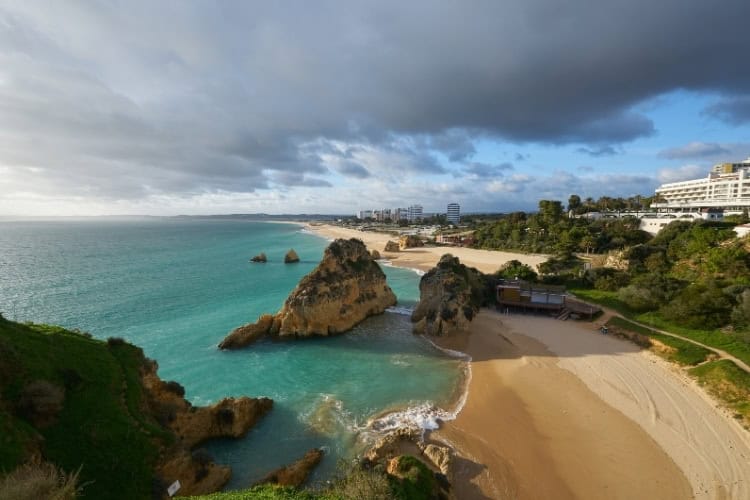
The Algarve is known for its beaches and limestone cliffs. The Alentejo offers rolling hills, cork trees, vineyards, and peaceful villages. Central Portugal has forests, river beaches, historic towns, and mountain areas. The north is greener and more rugged, while Madeira and the Azores offer island living surrounded by volcanic scenery and ocean views.
This variety makes it easier to find a setting that suits the retirement you imagine. You could live close to the ocean without choosing a busy resort, or settle in the countryside while remaining within driving distance of a larger town.
Portugal’s long coastline also gives you a choice between lively beach communities and quieter areas with fewer tourists.
3. The Pace of Life Can Feel More Relaxed

Many retirees appreciate that daily life in Portugal often moves at a slower pace. Long lunches, conversations over coffee, local markets, and evening walks are still part of everyday life in many communities.
That does not mean everything is stress-free. Government appointments, home repairs, deliveries, and paperwork can sometimes take longer than Americans expect. Customer service may also feel less urgent than it does in the United States.
However, the general rhythm of life can feel less rushed, especially outside Lisbon, Porto, and the busiest parts of the Algarve.
After spending decades working around deadlines, commutes, and alarms, this slower rhythm can be a welcome change. A good retirement in Portugal is often less about being on a permanent vacation and more about enjoying an easier daily routine.
4. Portuguese People Are Often Kind and Helpful

One of the things we appreciate most about Portugal is how helpful people can be when you genuinely need assistance. A neighbor may help you understand a bill, a store employee may explain how something works, or someone may walk with you instead of simply pointing out a direction.
Portuguese people can seem reserved at first, particularly in smaller communities. Friendships may take time to develop, and you should not expect to be immediately included in local social circles. However, the relationships that do develop can feel sincere and dependable.
Making an effort to speak Portuguese makes a noticeable difference. Even a few basic phrases show respect and usually lead to a warmer interaction.
It is possible to live mainly within an international community, particularly in the Algarve, Lisbon, Cascais, Porto, Madeira, or parts of the Silver Coast. Still, learning the language and getting to know local people will usually make your retirement richer and less isolating.
5. Portugal Is Considered a Safe and Peaceful Country

Feeling comfortable in your surroundings matters enormously when choosing where to retire. Portugal consistently ranks as one of the more peaceful countries in the world.
Violent crime is relatively uncommon in many Portuguese communities. Retirees often feel comfortable walking through town, using public spaces, or sitting outside in the evening.
That said, no country is completely free from crime. Pickpocketing and bag theft can occur in crowded tourist areas, on public transportation, and around major attractions. You should also avoid leaving phones, bags, or other valuables visible inside a parked car.
Safety varies by neighborhood, so investigate the exact area rather than judging an entire city or region. Spend time there during the day and evening, and speak with people who already live locally.
6. The Cost of Living Can Be Lower Than in the United States

Portugal is no longer the extremely inexpensive retirement destination sometimes described in older articles. Housing prices have risen considerably, particularly in Lisbon, Porto, Cascais, the Algarve, and other areas popular with international buyers.
However, everyday expenses can still be lower than in many parts of the United States. Local produce, coffee, bread, public transportation, and meals at traditional Portuguese restaurants are often reasonably priced.
Your actual cost of living will depend mainly on:
- Where you live
- Whether you rent or buy
- The size and condition of your home
- Whether you need a car
- How often you eat at tourist-oriented restaurants
- How many American or imported products you buy
Based on recent Portuguese housing data and an exchange rate of approximately $1.14 per euro, the national median asking rent for new leases was roughly $11 per square meter per month. That equals approximately $1.02 per square foot.
The national median home price was approximately $2,370 per square meter, or around $220 per square foot. In Greater Lisbon, the median was closer to $3,920 per square meter, or approximately $365 per square foot. In the Algarve, it was around $3,580 per square meter, or approximately $333 per square foot.
These dollar figures are only rough conversions. Property is bought and rented in euros, so your real cost will change with the exchange rate. In mid-July 2026, one euro was worth approximately $1.14.
Living in a smaller city or inland town may reduce your housing costs, but you may need a car and have fewer English-speaking services nearby. Living in Lisbon or a popular Algarve town provides more convenience but usually comes with much higher rent and property prices.
Portugal can still work well on a moderate American retirement income, but your budget should be based on current listings rather than prices quoted several years ago.
7. Fresh Food Is Easy to Find

Portugal makes it relatively easy to eat fresh, simple food. Local markets and supermarkets usually offer seasonal fruit, vegetables, fish, bread, cheese, olives, meat, and other everyday ingredients.
Traditional Portuguese meals often use uncomplicated combinations of fresh products. Grilled fish, soup, vegetables, rice, potatoes, beans, and salads are common. Portions at traditional restaurants can be generous, especially outside the main tourist centers.
Eating local products is usually more affordable than trying to recreate the exact diet you followed in the United States. Imported cereals, sauces, snacks, specialty foods, and familiar American brands can cost considerably more.
Food can also become part of your new routine. Visiting a market, finding a favorite bakery, buying fish from a local seller, or having coffee at the same café helps a new place begin to feel like home.
8. Portugal Has Both Public and Private Healthcare
Healthcare is naturally one of the most important considerations when retiring overseas. Portugal has a national public healthcare service, known as the Serviço Nacional de Saúde or SNS, as well as private hospitals, medical centers, laboratories, and specialists.
Legal residents may qualify to register with the public healthcare system after completing the necessary residence and local registration procedures. However, access does not always begin immediately, and requirements can depend on your residence status and location.
Many American retirees also use private healthcare. Private appointments are generally easier to schedule and may provide faster access to specialists. Some doctors at private clinics also speak English.
Private health insurance may be required during the visa process. Even after becoming eligible for public healthcare, many retirees keep private insurance to reduce waiting times and gain easier access to doctors and hospitals.
Medicare usually does not cover care in Portugal
Americans should not assume that Medicare will pay for routine healthcare after moving abroad. In most situations, Original Medicare does not cover medical care or supplies received outside the United States. Coverage is generally limited to a few unusual circumstances. Some Medigap policies may offer limited emergency coverage during foreign travel, but this should not be treated as health insurance for permanently living in Portugal.
Before moving, investigate:
- When you become eligible for Portugal’s public system
- What private health insurance your visa requires
- Whether your policy excludes existing medical conditions
- Whether your medications are sold in Portugal
- The distance to the nearest hospital
- Whether local doctors speak English
- Whether you want to keep Medicare coverage in the United States
- What happens if you return to the United States for treatment
Portugal offers good healthcare options, but you need to arrange coverage carefully. Do not cancel an American insurance plan or Medicare component before understanding the long-term consequences.
9. Americans Can Usually Visit Portugal for Up to 90 Days

U.S. citizens can generally visit Portugal and the rest of the Schengen Area for up to 90 days within any rolling 180-day period without first obtaining a traditional tourist visa.
This is useful when exploring possible retirement locations. You can spend several weeks living in an area, shopping locally, testing transportation, and experiencing ordinary life before making a permanent decision.
However, the 90-day rule applies to the entire Schengen Area, not just Portugal. Spending 60 days in Portugal and another 30 days in Spain would normally use the full allowance.
A visa-free stay does not give you the right to live permanently in Portugal. It also does not allow you to remain in the country indefinitely by briefly crossing a border and returning.
Americans who want to establish a real retirement in Europe need an appropriate long-stay visa and residence permit.
10. The D7 Visa Is a Common Route for American Retirees
The D7 residence visa is the route most commonly associated with retirees and other people who receive regular passive income.
This may include income from:
- Social Security
- A pension
- Retirement accounts
- Rental properties
- Dividends
- Other stable recurring sources
You normally begin the process while you are still legally residing in the United States. Depending on where you live, the application may be handled through a Portuguese consulate or its designated visa-processing service.
The exact requirements can change, but applicants are generally asked to provide:
- A valid passport
- A completed visa application
- Passport-style photographs
- Proof of regular income
- Bank statements
- Proof of accommodation in Portugal
- A Portuguese tax identification number, known as a NIF
- Health or travel insurance
- A criminal background check
- Permission for Portuguese authorities to review your criminal record
- A personal statement explaining your plans
- Additional documents requested by the consulate
Portugal’s official visa service in the United States lists national residence visas separately from ordinary short-stay Schengen visas. Applicants should always select the instructions for their state and the correct consular jurisdiction.
Proof of accommodation is often one of the more difficult parts of the application. Applicants may need to show a Portuguese lease, property ownership, or another accepted housing arrangement. A short hotel reservation may not be sufficient.
The D7 visa is designed for people who intend to live in Portugal. It is not simply a way to obtain European residency while continuing to spend nearly all your time in the United States.
11. You Complete the Residence Process After Arriving
Receiving a D7 visa is not the final step. It allows you to enter Portugal and continue the residence process after arrival.
Once in Portugal, you generally attend an appointment with AIMA, Portugal’s immigration and integration agency. During this stage, your documents are checked again and biometric information may be collected.
You may need to bring:
- Your passport and visa
- Proof of your Portuguese address
- Proof of income or savings
- Health insurance documents
- Your Portuguese tax number
- Other documents requested for your appointment
Once approved, you receive a residence permit rather than remaining in Portugal on a tourist stay.
Appointments, document requests, and processing times can change. Delays are possible, so keep copies of every application, receipt, appointment notice, and supporting document.
The immigration process in Portugal is manageable, but it often requires patience. Do not make nonrefundable moving arrangements based entirely on information from a Facebook group, video, or outdated blog post.
12. Your Spouse May Be Able to Join Your Application
Married couples may be able to apply together or use family reunification procedures, depending on their circumstances and the instructions of the responsible consulate.
However, couples should not automatically assume that one person’s retirement income will satisfy every requirement. The required financial resources generally increase when a spouse or other dependent family member is included.
You may also need:
- A certified marriage certificate
- An apostille
- A recent copy of the certificate
- A Portuguese translation
- Separate background checks
- Separate insurance documents
- Additional proof of income
Document requirements can be very specific. A certificate that is too old, incorrectly certified, or missing an apostille may not be accepted.
Check the instructions for your own Portuguese consulate before ordering documents or paying for translations.
13. You Can Find Established International Communities

Starting again socially is one of the hardest parts of moving abroad. Portugal has established international communities in the Algarve, Lisbon, Cascais, Porto, Madeira, and the Silver Coast. Especially many British citizens spend their winters in Portugal or moved to Portugal for retirement as well.
These communities can make your first year much easier. You may find walking groups, book clubs, volunteering opportunities, language exchanges, sports clubs, social lunches, and online groups for newcomers.
International friends also understand practical challenges such as registering for healthcare, finding a contractor, opening a bank account, or dealing with unfamiliar paperwork.
However, try not to build your entire life inside an American or expatriate bubble. International residents may move away, spend only part of the year in Portugal, or return home unexpectedly.
A stronger long-term social life usually combines international friendships with local connections.
14. English Is Widely Spoken in Popular Retirement Areas
English is commonly spoken in tourist destinations, larger cities, private hospitals, hotels, restaurants, and businesses serving international residents.
You may be able to arrange many essentials in English in the Algarve, Lisbon, Cascais, Porto, or Madeira. In smaller towns and government offices, however, English should not be assumed.
Learning basic Portuguese remains valuable even when you can manage without it. It helps during medical appointments, conversations with neighbors, home repairs, telephone calls, and unexpected situations.
Portuguese pronunciation can be challenging for English speakers, but you do not need to become fluent immediately. Start with greetings, numbers, days, food, directions, medical terms, and polite phrases.
Consistent effort matters more than perfect pronunciation.
15. Portugal Offers Many Different Places to Retire

There is no single best town for everyone. Some retirees want beaches and international restaurants, while others prefer cooler weather, lower housing costs, culture, or a quiet village.
The Algarve
The Algarve is popular for its sunshine, beaches, golf courses, international communities, and access to English-speaking services. Housing can be expensive in the most desirable coastal towns, and some locations become extremely busy during summer.
The Silver Coast
The Silver Coast appeals to people who want coastal living at a slower pace. Property can be less expensive than in the central Algarve, although prices have also increased here. Winters are cooler, wetter, and windier, and the Atlantic Ocean can be cold.
Central Portugal
Central Portugal offers historic towns, countryside, forests, river beaches, and potentially lower housing prices. However, you should investigate wildfire risks, healthcare access, winter temperatures, and whether you will need a car.
Lisbon and Cascais
Lisbon and Cascais provide culture, international connections, major hospitals, restaurants, entertainment, and public transportation. They are also among the most expensive areas in Portugal.
Porto and Northern Portugal
Porto and the north offer city life, green scenery, vineyards, traditional communities, and a strong local culture. Winters are generally wetter and cooler than in southern Portugal.
The Alentejo
The Alentejo is suitable for people seeking space, quiet living, traditional towns, and countryside. Summers can be extremely hot, while hospitals and other services may be farther away.
Madeira
Madeira offers mild temperatures, dramatic scenery, and a slower island lifestyle. Imported products can cost more, and visiting mainland Portugal or the United States requires a flight.
Portugal frequently appears on lists of the best places to retire in Europe, but the right region depends on your health, budget, climate preferences, and preferred daily routine.
16. Outdoor Living Can Become Part of Your Routine

In many parts of Portugal, outdoor life is possible during much of the year. A normal week might include walking along the coast, gardening, visiting an outdoor market, cycling, swimming, playing golf, or meeting friends on a terrace.
This can be particularly valuable during retirement because movement does not always need to feel like formal exercise. Walking to a café, climbing the streets of an old town, or spending time in the garden can naturally make your day more active.
Portugal also has coastal paths, forest routes, river walks, nature reserves, mountain trails, and long-distance walking routes.
However, be realistic about the terrain. Many historic Portuguese towns have steep streets, uneven cobblestones, and numerous steps.
A beautiful hilltop village may become difficult if you have knee, hip, balance, or mobility problems. Explore the immediate neighborhood on foot before renting or buying a home.
17. Portugal Is Well Connected to the United States and Europe

Portugal is located on the western edge of Europe, making it one of the closer European countries to the East Coast of the United States.
Lisbon, Porto, and Faro have international airports. Depending on the season, direct flights may be available between Portugal and cities such as New York, Newark, Boston, Miami, Washington, D.C., and San Francisco.
Flight routes change regularly and some operate only during part of the year. Check winter schedules as well as summer schedules before assuming that a direct route will always be available.
Your location within Portugal also matters. Living near Lisbon, Porto, or Faro gives you more flexibility than choosing a remote property several hours from an airport.
Portugal can be a practical base for a wider retirement in Europe, especially when you want to explore other countries while maintaining one permanent home.
18. Public Transportation Is Useful in Larger Cities

Lisbon and Porto have extensive public transportation networks, including metro services, trains, trams, and buses. Many surrounding towns are connected by suburban rail.
Long-distance trains and coaches connect major Portuguese cities and regional centers. This makes it possible to travel around much of the country without driving.
Public transportation becomes more limited in rural areas, small villages, and some coastal communities. A bus may run only a few times a day, and reaching a hospital, supermarket, or government office may require a car.
Before choosing a home, test the journey to places you will use regularly:
- Grocery store
- Pharmacy
- Health center
- Hospital
- Train or bus station
- Airport
- Bank
- Local government office
Do not assume that a home described as “only 15 minutes from town” will be practical without a car.
19. Portugal Has a Rich History and Culture

Retirement gives you time to explore a country slowly, and Portugal has centuries of history to discover.
You can visit castles, monasteries, Roman ruins, tiled churches, fishing villages, palaces, museums, vineyards, and traditional festivals. Each region has its own food, architecture, customs, and celebrations.
Instead of rushing between tourist attractions during a short vacation, you can return during quieter seasons and get to know places properly.
You might learn about Portuguese wine, attend a local festival, take a cooking class, study the language, or walk part of the Camino Portugués.
This cultural depth is one reason Portugal can remain interesting long after the excitement of your initial move has passed.
20. Eating Out Can Remain Part of Everyday Life

In many Portuguese towns, a simple meal at a local restaurant can still be affordable compared with dining out in large American cities.
Lunch menus may include soup, a main dish, a drink, and coffee. Bakeries and cafés are part of everyday community life rather than places reserved for special occasions.
Prices are usually higher in tourist centers, beachfront locations, and international restaurants. You will often find better value a few blocks away from the busiest areas.
Eating out can also reduce loneliness. Visiting the same café or restaurant regularly helps you become a familiar face, even before you speak much Portuguese.
21. Portugal Offers a Good Balance of Comfort and Adventure

Perhaps the strongest reason to retire abroad in Portugal is the balance it offers. Life feels different enough to be exciting, but many everyday comforts remain accessible.
You can spend the morning walking beside the Atlantic, buy vegetables at a traditional market, speak English when you genuinely need assistance, and fly to another European country for a short trip.
You can choose a lively international community, a historic city, a quiet Portuguese town, or a home near the coast.
That balance is why some Americans consider Portugal the best place to retire overseas. It combines a mild climate, varied scenery, relative safety, cultural experiences, healthcare options, international connections, and a relaxed lifestyle within one relatively small country.
Still, Portugal will not be right for everybody. Housing has become more expensive, bureaucracy can test your patience, public healthcare may involve waiting, older homes can be cold during winter, and learning Portuguese requires effort.
Americans also need to consider currency changes, private health insurance, distance from family, and the responsibilities of filing taxes in two countries.
U.S. citizens generally remain subject to U.S. tax reporting on their worldwide income even while living abroad. Depending on your financial situation, you may also have foreign bank account and asset-reporting obligations. Foreign tax credits or treaty rules may help prevent double taxation, but retiring abroad does not normally end your U.S. filing responsibilities.
Before moving, spend an extended period in the Portuguese region you are considering. Live as normally as possible. Shop for groceries, visit the pharmacy, use public transportation, examine current rental listings, and experience the area outside the main tourist season.
Portugal may be one of the best places to retire in Europe, but the goal is not to choose the country that looks best in vacation photographs. The goal is to find a place where your income, healthcare needs, relationships, and preferred daily routine can work for many years.
Read more: Retirement in Portugal: A Complete Guide for Americans
